Meeting details
Date: May 08, 2026
Topic: Preventing Falls Through Unguarded Loft Hatches
Goal: This toolbox talk on unguarded loft hatch will review the Willow Services (Southern) Limited incident where a roofer fell through an unguarded loft hatch and prevent similar accidents in 2026.
The incident: what happened?
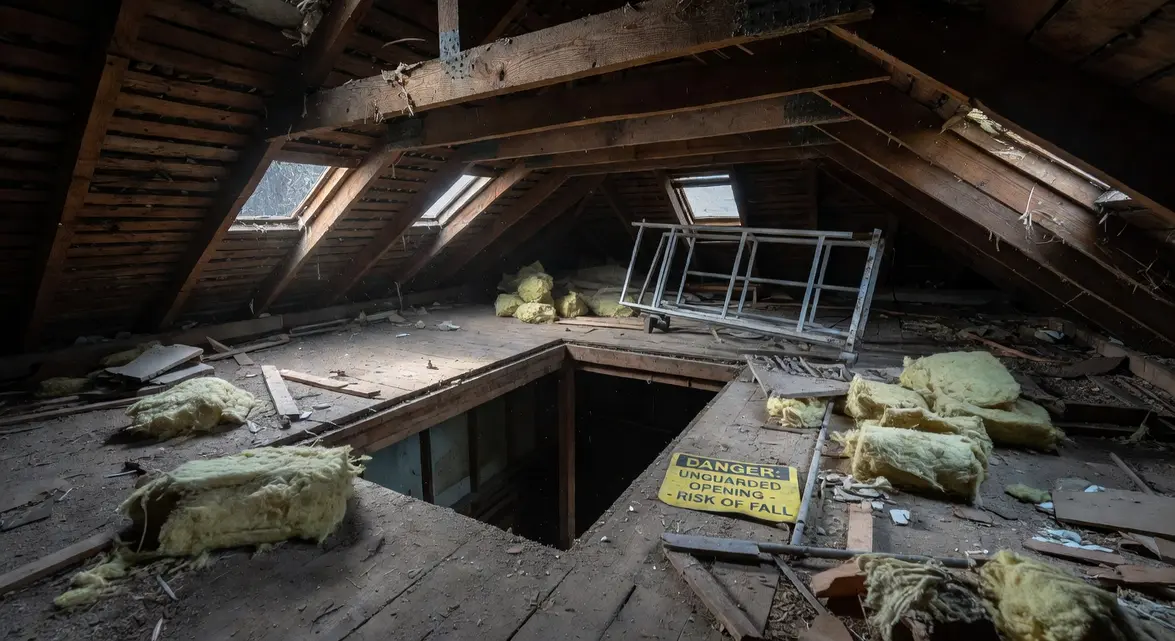
On 13 May 2024, during re-roofing work at a domestic property in Wimbledon, roofer Mark Smith fell approximately 11 feet through an unguarded loft hatch while stripping internal insulation in the roof space. The Hampshire-based company, Willow Services (Southern) Limited, was later fined £20,000 at Westminster Magistrates’ Court on 30 April 2026 after pleading guilty to breaching Regulation 4(1) of the Work at Height Regulations 2005. This tragic oversight with the unguarded loft hatch directly caused severe injuries, including a fractured L1 vertebra and hip, resulting in life-changing consequences for Mr. Smith. He was unable to return to work, and his employment was eventually terminated.
The Health and Safety Executive (HSE) investigation revealed critical failures: inadequate planning for work at height, no suitable measures to prevent falls in the roof space, lack of competent supervision, and overseers without the necessary training or experience for construction activities. These lapses turned a routine task into a preventable catastrophe, highlighting the real-world dangers of overlooking simple hazards like an unguarded loft hatch in confined roof spaces.
Core safety lesson
The core failure in this incident stemmed from not identifying and protecting potential fall openings during the planning phase, allowing an unguarded loft hatch to become a deadly trap.
The Hazard: Unguarded loft hatch and other potential fall openings, such as fragile surfaces or roof space voids, which can lead to falls from height when workers access confined areas like lofts during roofing or insulation work.
The Control: Conduct thorough risk assessments to identify all potential fall openings (e.g., hatches, fragile surfaces) and install physical guards, barriers, or covers before work begins, following the HSE work at height guidance and the fall prevention hierarchy: avoid work at height if possible, then prevent falls using collective protection like guards, and finally minimize consequences with personal fall protection.
This control is non-negotiable because work at height remains one of the leading causes of serious injuries and fatalities in construction. An unguarded loft hatch may seem minor, but as seen in this case, it resulted in life-changing injuries and a £20,000 fine. Proper planning ensures hazards are spotted early—before tools or workers enter the space—preventing complacency. Supervisors must verify competence in height risks, as untrained overseers cannot enforce controls effectively. Implementing these measures not only complies with Regulation 4(1) of the Work at Height Regulations 2005 but protects lives and avoids legal repercussions.
Remember, the hierarchy prioritizes prevention over mitigation: guards on an unguarded loft hatch stop falls entirely, unlike harnesses that only arrest them after the fact. Skipping this step invites disaster, as evidenced by the HSE’s findings on inadequate planning and supervision.
Supervisor’s discussion guide
Use these questions to engage the crew and apply lessons to our site:
Q1: “Looking at our own equipment and work areas today, where is the biggest risk of an unguarded loft hatch or similar fall opening?”
Q2: “What steps should we take in our risk assessments to identify and guard potential hazards like loft hatches before starting work at height?”
Q3: “How can we ensure our supervisors have the training and experience needed to oversee roof space activities safely?”
Q4: “If we spot an unguarded loft hatch on site, what immediate actions will we take to prevent access until it’s secured?”
Action plan & inspection
Immediately after this meeting, conduct these checks and implement actions:
- Inspect all current and upcoming work areas for unguarded loft hatches, roof voids, or fragile surfaces; install barriers or covers where needed.
- Review site risk assessments to confirm work at height planning includes the fall prevention hierarchy and identification of all openings.
- Verify supervisor competence: Check training records and experience for height-related tasks; reassign if gaps exist.
- Conduct a walkthrough of roof spaces or loft areas, documenting guards, access equipment, and signage.
- Update method statements for re-roofing or insulation work to mandate pre-work hatch protection and competent oversight.
Key takeaways
Falls from height, especially through hazards like an unguarded loft hatch, are entirely preventable with diligent planning and competent supervision. This Willow Services incident underscores that failing to identify and guard such openings breaches core regulations and leads to devastating outcomes—fractured vertebrae, lost livelihoods, and hefty fines. Prioritize the HSE hierarchy: avoid, prevent, minimize. Always assess thoroughly before entry, install physical protections first, and ensure overseers are trained experts.
Make it personal: No job is worth a life-changing injury. After this toolbox talk, commit to zero tolerance for unguarded loft hatches or similar risks. Regular inspections, crew discussions, and verified competence will keep our sites safe in 2026 and beyond. Sign off below to confirm understanding and actions taken.
Source & Disclaimer: This toolbox talk is for educational purposes based on public report. Read Original Report