Meeting details
Topic: Preventing forklift falling load incidents through proper load securing and zone controls
Goal: This toolbox talk on forklift falling load will review the fatal incident at Industrial Warehouse Services and prevent similar accidents in 2026.
The incident: what happened?
On June 1, 2026, at approximately 1:45 p.m., a 57-year-old warehouse worker named Anthony Mark Lamattina III was fatally injured while helping unload a truck at Industrial Warehouse Services on Pearman Dairy Road in Anderson, South Carolina. Materials on a forklift being operated by a coworker began to fall, creating a forklift falling load that pinned Lamattina beneath a pallet and caused traumatic asphyxiation. The death was ruled accidental, and the incident remains under investigation by the Anderson County Sheriff’s Office, the coroner, and OSHA.
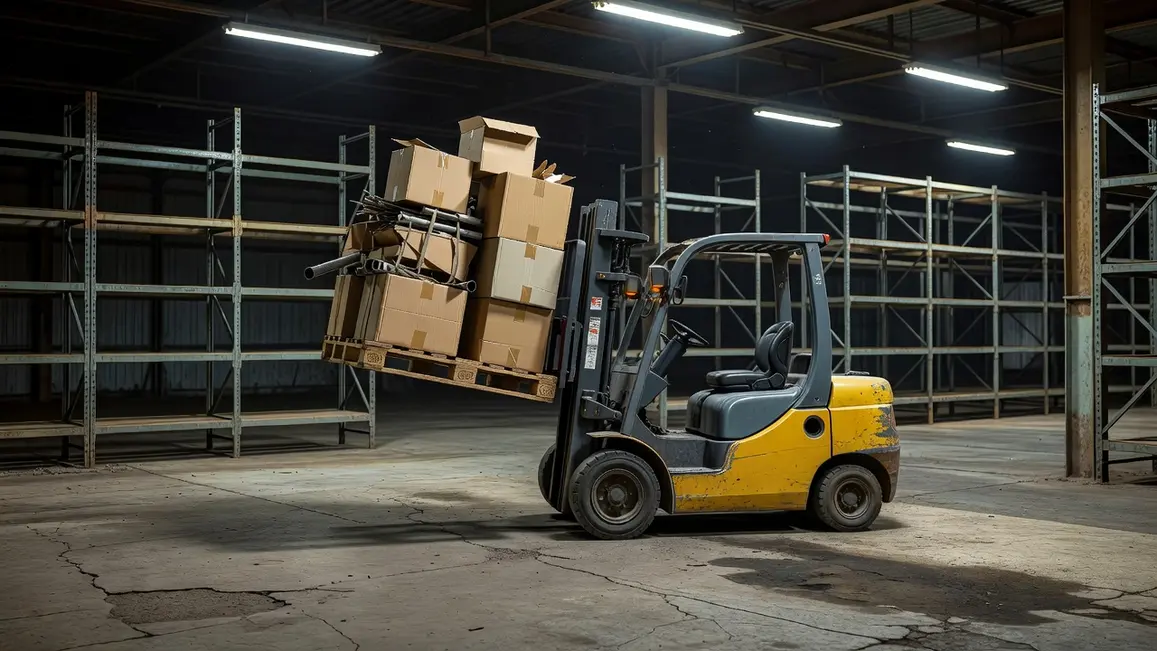
The sequence of events highlights how quickly an unsecured or shifting load can turn routine unloading into a fatal event. No barriers or designated exclusion zones were in place to keep ground personnel clear of the elevated materials, and pre-task hazard recognition did not identify the risk of a forklift falling load during the operation.
Core safety lesson
The Hazard: Unsecured or improperly arranged load on a forklift combined with workers positioned in the fall zone.
The Control: Require loads to be centered, stable, and secured before movement; establish and enforce “no-go” zones around operating forklifts using barriers or spotters.
These controls are non-negotiable because a forklift falling load can occur in seconds when materials shift due to uneven stacking, excessive speed, or an obstructed load center. Once the load begins to fall, there is no time for bystanders to react, and the resulting crush or asphyxiation injuries are almost always catastrophic. Enforcing load verification and exclusion zones removes the possibility of personnel being in the line of fire.
Pre-task planning discussions further reinforce these controls by forcing the crew to identify pinch, crush, and struck-by hazards before work begins. Clear verbal or radio communication between the operator and ground personnel ensures that any change in load stability is immediately communicated, allowing operations to stop before a forklift falling load develops.
Supervisor’s discussion guide
Q1: “Looking at our own equipment today, where is the biggest risk of unsecured materials shifting during forklift operations?”
Q2: “What physical barriers or designated walkways do we currently have in place to keep personnel outside the potential fall radius of elevated loads?”
Q3: “How would we adjust our unloading procedure if we identified a forklift falling load risk during the pre-task discussion?”
Q4: “Are there any areas on this site where ground personnel routinely stand too close to operating forklifts, and how do we correct that immediately?”
Action plan & inspection
- Verify that all forklift loads are centered, stable, and secured with straps or shrink-wrap before any movement begins.
- Confirm that “no-go” zones are clearly marked with barriers or cones around every active forklift unloading operation.
- Conduct a documented pre-task planning discussion (tailgate or JSA) before the next unloading task starts.
- Ensure operators check load integrity and never exceed the forklift’s rated capacity or load center.
- Establish and test clear verbal or radio communication protocols between forklift operators and ground personnel.
Key takeaways
Every forklift operation must begin with verified load security and enforced exclusion zones so that no worker can be struck by a forklift falling load. Consistent use of pre-task planning and ongoing communication turns these controls into daily habits rather than occasional reminders.
Supervisors are responsible for stopping work the moment any load appears unstable or any person enters the fall zone. These actions protect the entire crew and ensure that the lessons from the June 1, 2026 incident result in lasting prevention rather than repeated tragedy.
Source & Disclaimer: This toolbox talk is for educational purposes based on public report. Read Original Report