Meeting details
Date: April 28, 2026
Topic: Roofing Fall Protection – Critical Lessons from Fatal Roof Incident
Goal: This toolbox talk on roofing fall protection will review the fatal incident at Max Home Services LLC (operating as Pasat Roofing and Solar Energy) in Fort Lauderdale, Florida, and equip supervisors and crews with strategies to prevent similar accidents in 2026.
The incident: what happened?
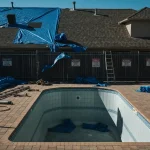
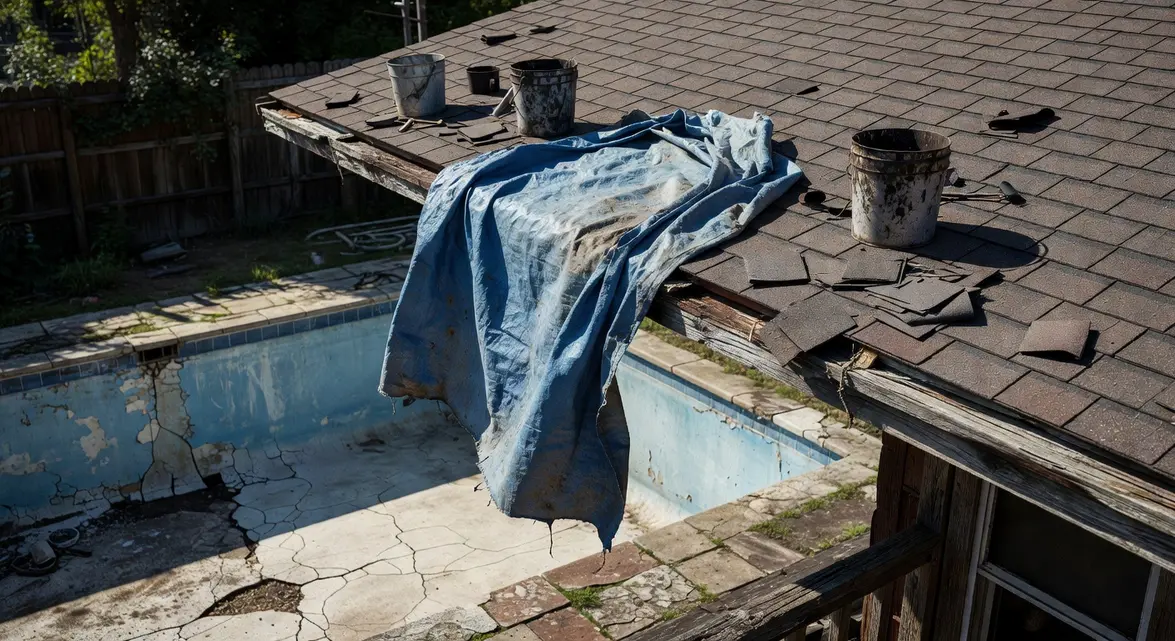
On September 24, 2025, two employees of Max Home Services LLC, operating as Pasat Roofing and Solar Energy, were installing tarp on the roof of a two-story residence in Fort Lauderdale, Florida. Despite working at heights over 20 feet, roofing fall protection measures such as harnesses, guardrails, or warning lines were absent. The workers slipped on the roof and fell more than 20 feet directly into an empty pool below, resulting in one worker’s death and serious injuries to the other. This preventable tragedy highlighted a willful disregard for basic safety protocols.
The U.S. Department of Labor’s OSHA investigated and issued one willful violation for the lack of personal fall protection, along with two serious violations: inadequate training on fall hazards and failure to implement a hazard communication program for hazardous chemicals used on site. OSHA proposed penalties totaling $172,324, which the company has contested. Root causes included no personal fall arrest systems, insufficient employee training on recognizing roof work risks like slips during tarp installation, and no written program providing safety data sheets, labeled containers, or chemical handling training.
Core safety lesson
The technical failure in this incident centered on the complete absence of roofing fall protection systems, allowing workers to fall unimpeded from a height exceeding OSHA’s 6-foot trigger for residential construction and 20 feet in this case. Additional failures compounded the risk: workers lacked training to identify slip hazards on sloped roofs during tarp work, and hazardous chemicals were handled without proper communication protocols.
The Hazard: Unprotected roof edges over 20 feet, combined with slippery surfaces from tarp installation and untreated chemical exposures, create lethal fall risks in roofing operations.
The Control: Implement personal fall arrest systems (harnesses anchored to structural members capable of 5,000-pound support), guardrails (42 inches high with midrails and toeboards), or warning lines 6 feet from edges, per OSHA 1926.501. Roofing fall protection is non-negotiable because falls are the leading cause of death in construction, accounting for one-third of fatalities; a single lapse, as seen here, results in irreversible tragedy. Training under 1926.503 must cover site-specific hazards, equipment inspection, and emergency rescue, while a HazCom program (1910.1200) ensures chemical risks don’t exacerbate slips or impair judgment.
Enforcing roofing fall protection daily through pre-task briefings and 100% tie-off policies saves lives—OSHA data shows compliant sites reduce fall incidents by over 70%. Supervisors must verify anchors, inspect harnesses for wear, and document training to avoid willful citations like the $172,324 proposed here.
Supervisor’s discussion guide
Engage your crew with these questions to drive home the lessons:
Q1: “Looking at our own roofing equipment and site today, where is the biggest risk of a fall from unprotected edges?”
Q2: “What steps would you take if you notice loose tarp or slippery conditions on a roof edge during installation?”
Q3: “How does our current training prepare us for roofing fall protection requirements, and what gaps do we see?”
Q4: “Recall a time when chemical handling intersected with height work—how did we communicate those hazards?”
Action plan & inspection
- Inspect all personal fall arrest systems (harnesses, lanyards, anchors) for damage, ensuring 100% operational readiness and proper fit documentation.
- Verify installation of guardrails or warning lines on all roof edges over 6 feet, confirming compliance with OSHA 1926.501 dimensions.
- Conduct immediate crew training refresh on fall hazard recognition, including tarp installation slips and rescue procedures.
- Review and update the site HazCom program: confirm chemical inventories, SDS binders are accessible, and containers are labeled.
- Perform a full site walkdown to identify and mitigate any unprotected edges or slippery surfaces before next task start.
Key takeaways
Falls from roofs remain a top killer in construction, as evidenced by the Max Home Services tragedy where absent roofing fall protection led to one death and one severe injury from a 20+ foot plunge into an empty pool. Supervisors must lead by enforcing personal fall arrest systems, collective barriers, and rigorous training—zero tolerance for shortcuts, as willful violations carry steep penalties and lifelong consequences.
Implement these controls today: anchor securely, train thoroughly, communicate chemical hazards, and inspect relentlessly. By prioritizing roofing fall protection in every toolbox talk and task, we honor the fallen and protect our crews for a zero-incident 2026.
Source & Disclaimer: This toolbox talk is for educational purposes based on public report. Read Original Report