Meeting details
Date: April 24, 2026
Topic: Roofing Fall Protection Essentials
Goal: This toolbox talk on roofing fall protection will review the fatal and serious falls at a Florida roofing site involving Max Home Services LLC and prevent similar accidents in 2026.
The incident: what happened?
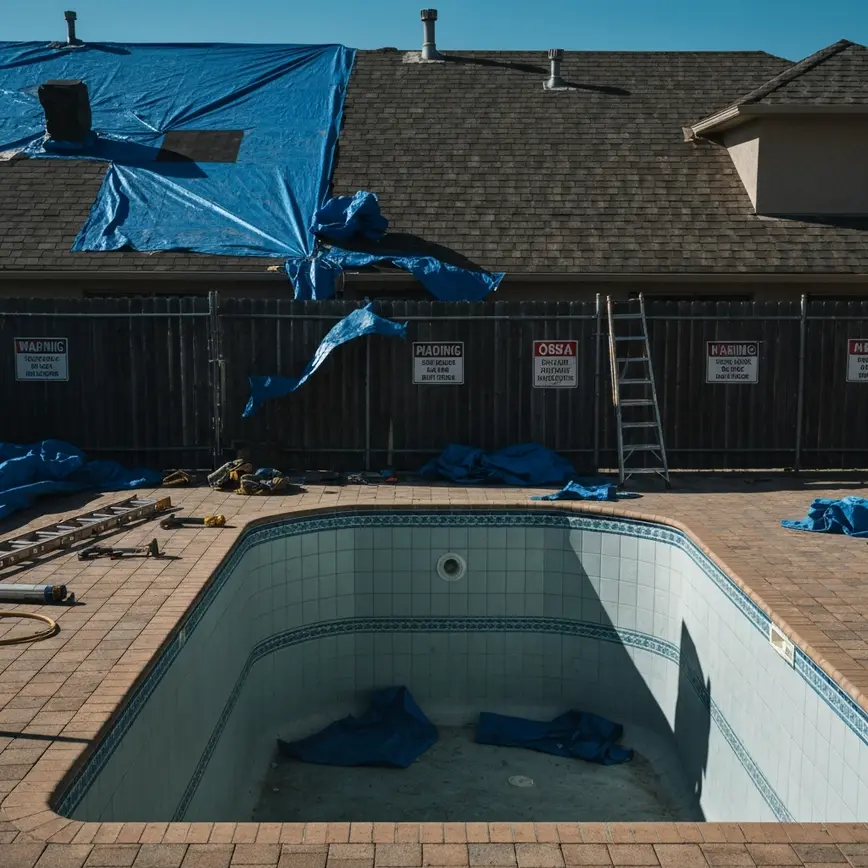
On September 24, 2025, at a two-story residence in Fort Lauderdale, Florida, two workers from Max Home Services LLC, operating as Pasat Roofing and Solar Energy, were installing a tarp on a roof at heights over 20 feet. Tragically, they slipped and fell into an empty pool below. This incident underscores a critical failure in roofing fall protection, resulting in one worker suffering fatal injuries and the other sustaining serious injuries. The U.S. Department of Labor’s OSHA launched an immediate investigation, revealing severe lapses in safety protocols.
OSHA issued one willful violation for the absence of personal fall protection, along with two serious violations: inadequate fall hazard training for workers and no hazard communication program for chemicals used on site. The proposed penalties totaled $172,324, which the employer contested before the Occupational Safety and Health Review Commission. This case highlights how neglecting roofing fall protection and related training can lead to devastating consequences on construction sites.
Core safety lesson
The technical failure in this incident stemmed from multiple violations, but the primary issue was the complete lack of personal fall protection systems at heights exceeding 20 feet, directly contributing to the workers’ plunge into the empty pool.
The Hazard: Unprotected roof edges and slopes over 20 feet, combined with slippery surfaces from tarp installation, inadequate training on fall risks, and absence of a chemical hazard communication program.
The Control: Mandate OSHA-compliant personal fall arrest systems, such as full-body harnesses with lanyards anchored to secure points, guardrails, or safety nets per 29 CFR 1926.501. Additionally, provide comprehensive training via OSHA 10/30-hour construction outreach programs covering site-specific fall hazards, equipment use, and emergency procedures, with documented competency checks. Implement a written Hazard Communication program per 29 CFR 1910.1200, including Safety Data Sheets, labeled containers, and training on chemical risks.
Roofing fall protection is non-negotiable because falls remain the leading cause of death in construction, accounting for one-third of fatalities annually. Without reliable systems like harnesses anchored properly, even minor slips on steep roofs become lethal, as seen in this Florida case where heights over 20 feet amplified the risk into an empty pool. Training ensures workers recognize hazards like slick tarps or chemical residues, fostering a culture of vigilance. Skipping these controls not only invites OSHA penalties but erodes trust and productivity—investing in them saves lives and complies with federal mandates.
Furthermore, a robust HazCom program prevents secondary hazards, such as chemical slips exacerbating fall risks during roofing tasks. Supervisors must verify equipment integrity daily; a single overlooked anchor point or untrained crew member can cascade into catastrophe. Prioritizing roofing fall protection integrates seamlessly into workflows, turning potential tragedies into routine safe operations.
Supervisor’s discussion guide
Engage your crew with these targeted questions to drive home the lessons from this toolbox talk:
Q1: “Looking at our own equipment today, where is the biggest risk of falls from unprotected roof edges?”
Q2: “How would you identify and report a site-specific fall hazard, like a steep roof over 20 feet, before starting work?”
Q3: “What steps must we take to ensure proper roofing fall protection systems, such as harness anchors, are inspected and used every shift?”
Q4: “Recall a time when chemical handling or training gaps could have led to a slip—how do we prevent that on our roofs?”
Action plan & inspection
Immediately following this meeting, conduct these 5 critical checks and implement actions:
- Inspect all personal fall arrest systems, including harnesses, lanyards, and anchors, for wear, damage, or improper fit—tag out and replace any defective items.
- Verify 100% compliance with roofing fall protection on all roofs over 6 feet: install guardrails, nets, or PFAS where required per 29 CFR 1926.501.
- Review crew training records for fall hazard recognition and HazCom—schedule OSHA outreach training for any gaps within 7 days.
- Audit chemical storage and usage: ensure SDS availability, labeled containers, and no-slip measures during tarp or roofing applications.
- Perform a site walk-through to mark and barricade all unprotected edges over 20 feet, posting warning signs until controls are in place.
Key takeaways
Falls from roofs demand unwavering commitment to roofing fall protection—guardrails, nets, or personal arrest systems are mandatory at heights over 6 feet, escalating to full compliance over 20 feet as in the Florida incident. This toolbox talk reinforces that willful neglect, like omitting harnesses during tarp work, leads to fatalities, massive fines ($172,324 proposed), and legal battles. Pair this with rigorous training on hazard recognition and HazCom to address root causes comprehensively.
Supervisors, lead by example: daily inspections, documented competencies, and zero-tolerance for shortcuts will shield your teams in 2026 and beyond. Remember, effective roofing fall protection isn’t optional—it’s the line between life and irreversible loss. Commit today to prevent tomorrow’s headlines.
Source & Disclaimer: This toolbox talk is for educational purposes based on public report. Read Original Report