
Meeting details
Topic: Industrial Machinery Fire Prevention
Goal: This toolbox talk on industrial machinery fire prevention will review the fire at the Caterpillar plant in Pontiac, Illinois, and prevent similar accidents in 2026.
The incident: what happened?
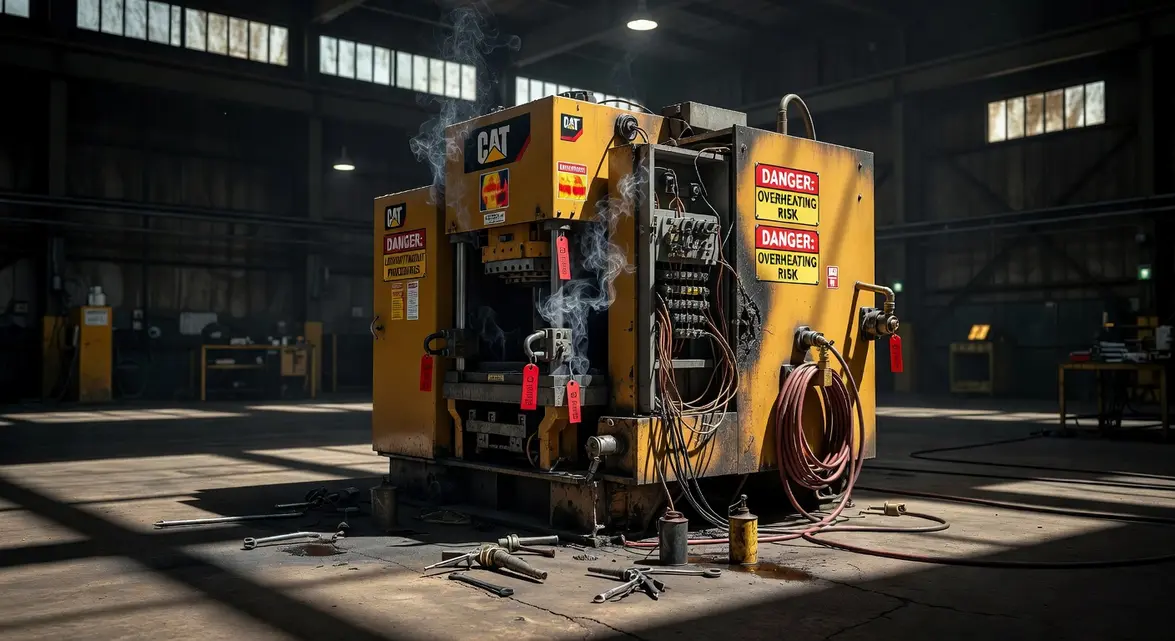
On April 6, 2026, at 6:06 p.m., a fire broke out at the Caterpillar facility in Pontiac, Illinois, specifically involving one machine on the south side of the plant. This incident highlights the vital importance of industrial machinery fire prevention measures in large-scale manufacturing environments where equipment operates under high stress. All workers evacuated safely with no reported injuries, demonstrating the effectiveness of immediate response protocols, but the event disrupted operations and required significant firefighting resources.
Firefighters from the Pontiac Fire Department responded promptly, upgrading the call to a box alarm due to the complexity of the industrial setting. They deployed a hoseline for suppression and collaborated closely with Caterpillar maintenance and security personnel to secure utilities, ensuring no further complications arose. The fire was brought under control without additional issues, though the exact cause remains under investigation. This rapid coordination prevented a worse outcome but serves as a stark reminder of the risks inherent in heavy machinery operations.
Core safety lesson
The technical failure in this case points to potential ignition sources within industrial machinery, such as electrical faults, hydraulic overheating, or frictional heat buildup—common precursors to fires in manufacturing plants like Caterpillar’s.
The Hazard: Machinery fire ignition from electrical, hydraulic, or frictional overheating, compounded by delayed detection in complex environments and uncontrolled utilities.
The Control: Implement regular preventive maintenance schedules, including thermal imaging inspections and lubrication checks; install automatic fire detection systems integrated with alarms; and establish standardized lockout/tagout (LOTO) procedures with pre-planned coordination for utility isolation.
These controls are non-negotiable because industrial machinery fire prevention relies on proactive detection to stop small issues from escalating into full blazes that can spread rapidly through fuel-laden equipment and confined spaces. Without thermal imaging and maintenance, hidden faults go unnoticed until ignition, as likely occurred here. Automatic detectors ensure early alarms, buying critical evacuation and response time, while LOTO prevents re-energization or fuel flow during suppression—directly mirroring the successful utility securing in Pontiac. Skipping these invites catastrophe, endangering lives, halting production, and incurring massive costs.
Enforcing these measures builds a layered defense: maintenance prevents ignition, detection enables response, and LOTO supports safe firefighting. In 2026, with evolving machinery complexities, complacency is the real hazard—rigorous adherence ensures our sites remain fire-resilient.
Supervisor’s discussion guide
Engage your crew with these questions to drive home the lessons:
Q1: “Looking at our own equipment today, where is the biggest risk of machinery fire ignition from overheating or electrical faults?”
Q2: “How confident are you in spotting early signs of hydraulic or frictional issues during daily checks?”
Q3: “What steps would we take right now if a fire started on one of our machines, including utility shutdowns?”
Q4: “How can we improve our industrial machinery fire prevention drills to match the coordination seen at Caterpillar?”
Action plan & inspection
Immediately after this meeting, verify and complete these 5 checks:
- Review and update preventive maintenance schedules for all machinery, scheduling thermal imaging and lubrication inspections within the next week.
- Inspect automatic fire detection systems (heat/smoke detectors) for functionality and integration with alarms, testing at least one per shift area.
- Audit lockout/tagout (LOTO) kits and procedures, ensuring every machine has accessible devices and staff training records are current.
- Conduct a walkthrough of high-risk areas (south-side equivalents) to confirm clear evacuation paths and utility isolation points are marked.
- Document coordination protocols with local fire services, including contact lists and pre-planned response roles for maintenance and security.
Key takeaways
The Caterpillar plant fire on April 6, 2026, was contained without injuries due to swift evacuation and firefighter coordination, but it underscores that industrial machinery fire prevention starts with us—through relentless maintenance, detection systems, and LOTO readiness. No incident is inevitable; every spark is preventable with disciplined controls that detect faults early and isolate hazards fast.
Commit today: inspect, train, and drill. In 2026, our sites will set the standard for zero-tolerance fire risks, protecting our teams and operations. Sign off below to confirm understanding and action.
Source & Disclaimer: This toolbox talk is for educational purposes based on public report. Read Original Report
