Meeting details
Date: April 23, 2026
Topic: Pipeline Whistleblower Retaliation During Gas Pipeline Installation
Goal: This toolbox talk on pipeline whistleblower retaliation will review the wrongful termination of a safety inspector by Legacy Energy and Distribution LLC during natural gas pipeline installation in Watonga, Oklahoma, and equip supervisors and crews with strategies to prevent similar incidents in 2026.
The incident: what happened?
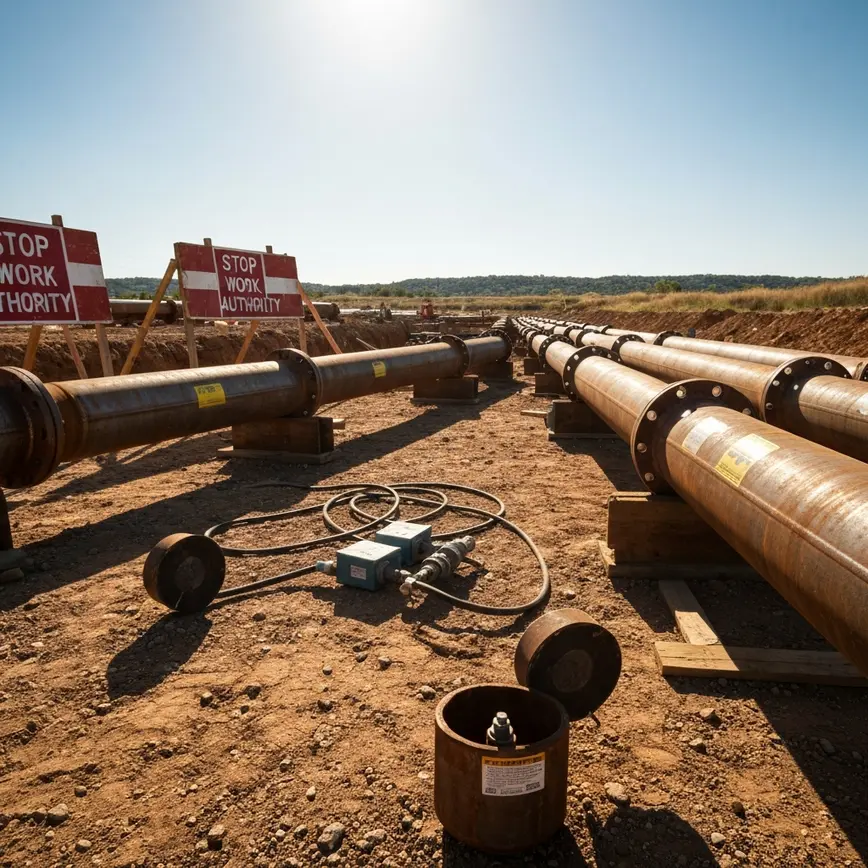
During natural gas pipeline installation in Watonga, Oklahoma, a safety inspector employed by Legacy Energy and Distribution LLC, a New Mexico-based company, identified serious non-compliance with federal regulations. Exercising stop work authority, the inspector halted operations and contacted a third-party testing company, whose findings were later confirmed as valid by Legacy. This case exemplifies pipeline whistleblower retaliation, as the company wrongfully fired the inspector for raising these legitimate safety concerns, violating protections under the Pipeline Safety Improvement Act.
The U.S. Department of Labor’s OSHA investigated the whistleblower complaint through its Whistleblower Protection Program and ruled in favor of the inspector. OSHA ordered Legacy to reinstate the employee, pay back wages, interest, and compensatory damages totaling over $35,000. This incident at the construction site underscores the severe consequences of ignoring safety reports, potentially allowing risks like gas leaks, explosions, or structural failures to persist unchecked.
Core safety lesson
The technical failure in this incident stemmed from a culture that tolerated pipeline whistleblower retaliation, where raising valid safety issues led to termination rather than corrective action. Non-compliant pipeline installation practices were overlooked because stop work authority was not respected, and federal regulations were bypassed during critical phases like gas pipeline laying.
The Hazard: Retaliation against whistleblowers who report pipeline safety violations, combined with non-compliant installation and unenforced stop work authority, creates an environment where hazards escalate without intervention.
The Control: Implement mandatory non-retaliation policies, anonymous reporting channels, and training on whistleblower protections under the Pipeline Safety Improvement Act; enforce pre-installation compliance checks with certified inspectors and third-party verification; establish binding stop work authority protocols with immediate supervisory review and documentation.
These controls are non-negotiable because pipeline operations involve inherently high risks—such as explosions from leaks or structural failures—that demand immediate halts and unbiased reporting. Without them, supervisors inadvertently prioritize production over safety, eroding trust and exposing the entire site to regulatory penalties, financial losses exceeding $35,000 as seen here, and catastrophic incidents. Enforcing these ensures compliance, protects workers, and upholds legal obligations, fostering a proactive safety culture essential for 2026 operations.
Supervisor’s discussion guide
Engage the crew with these questions to drive home the lessons on pipeline whistleblower retaliation and related hazards:
Q1: “Looking at our own equipment and pipeline setup today, where is the biggest risk of non-compliant installation or ignored stop work authority?”
Q2: “What would you do if you spotted a federal regulation violation during pipeline laying, and how can we ensure no one faces retaliation for speaking up?”
Q3: “Have we ever tested our anonymous reporting channels, and how do they protect against pipeline whistleblower retaliation?”
Q4: “Review our stop work authority protocol—what happens if it’s not followed, and how do we document it properly?”
Action plan & inspection
- Verify all supervisors have completed whistleblower protection training under the Pipeline Safety Improvement Act, with records updated today.
- Inspect current pipeline installation sites for compliance with federal regulations, including welding, pressure testing, and supports.
- Test anonymous reporting channels by submitting a mock safety concern and confirming receipt without traceability.
- Review and post stop work authority protocols at all high-risk areas, ensuring binding enforcement language.
- Conduct a third-party verification walkthrough for any ongoing natural gas pipeline sections, documenting findings immediately.
Key takeaways
Pipeline whistleblower retaliation, as demonstrated by the Legacy Energy case, not only violates federal law but endangers entire operations by silencing critical safety voices. Supervisors must champion non-retaliation policies, respect stop work authority, and mandate compliance checks to prevent non-compliant installations that risk leaks or explosions. This toolbox talk reinforces that protecting reporters under the Pipeline Safety Improvement Act is foundational to site safety.
In 2026, commit to these controls: anonymous channels, certified inspections, and documented protocols. By doing so, we avoid OSHA interventions, financial penalties over $35,000, and most importantly, preventable incidents. Safety reporting must be retaliation-free—make it your non-negotiable standard.
Source & Disclaimer: This toolbox talk is for educational purposes based on public report. Read Original Report