Meeting details
Date: March 20, 2026
Topic: Open Shafts Fall Protection
Goal: This toolbox talk on open shafts fall protection will review the tragic death of 19-year-old labourer Renols Lleshi on 5 July 2023 and prevent similar accidents in 2026.
The incident: what happened?
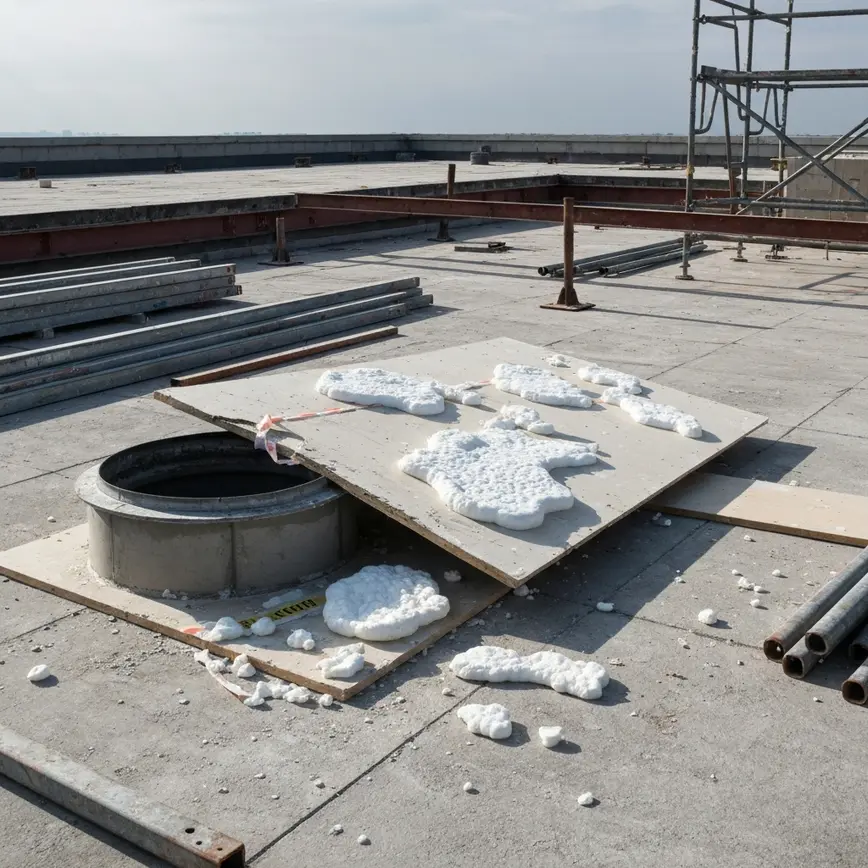
On 5 July 2023, a 19-year-old labourer named Renols Lleshi died after falling six floors down a ventilation shaft while dismantling scaffolding on the 12th floor roof garden of a block of flats under construction at the Ark Soane Academy site on Mill Hill Road, London W3. The Health and Safety Executive (HSE) investigation found that open shafts fall protection was critically inadequate, with the ventilation shaft concealed only by a fragile sheet of plasterboard and roofing foam that collapsed under his weight. This preventable failure highlighted how seemingly hidden hazards can lead to fatal falls when proper open shafts fall protection measures are not in place.
Routine inspections by Jerram Falkus Construction Limited failed to include the roof garden area, allowing the defective covering to go undetected. The company pleaded guilty to breaching Regulation 4(1) of the Work at Height Regulations 2005 and was fined £40,200, plus a £2,000 surcharge and £5,000 in costs, at City of London Magistrates Court on 18 March 2026. This incident underscores the dire consequences of overlooking open shafts fall protection in elevated work zones, where a single oversight can cost a young life.
Core safety lesson
The technical failure in this case stemmed from multiple lapses in work at height protocols, primarily the use of inadequate materials to cover the ventilation shaft and the exclusion of the roof garden from inspection routines. These errors allowed a hidden void to become a death trap during scaffolding dismantling.
The Hazard: Inadequate covering of open shafts/voids and uninspected elevated work areas, such as roof gardens, where fragile materials like plasterboard and foam can mimic solid surfaces but fail under load.
The Control: Install robust, load-rated covers or barriers over all floor openings, clearly marked and tested for strength per HSE work at height guidance; implement comprehensive, scheduled inspections of all elevated areas with checklists; and conduct thorough risk assessments with briefings, signage, edge protection, and fall arrest systems like harnesses.
Open shafts fall protection is non-negotiable because falls from height remain a leading cause of construction fatalities, and no worker—especially a young labourer—should rely on makeshift covers that provide a false sense of security. Robust controls ensure that every void is identified, secured, and verified before work begins, eliminating the guesswork that led to this tragedy. Supervisors must enforce these measures daily, as skipping inspections or using substandard materials not only breaches regulations like the Work at Height Regulations 2005 but erodes the trust and safety culture essential for our teams.
Supervisor’s discussion guide
Use these questions to engage the crew for 5 minutes, encouraging honest input on site-specific risks:
- Q1: “Looking at our own site today, where is the biggest risk of inadequate open shafts fall protection?”
- Q2: “What would you do if you spotted a covered void that looked suspicious during inspections?”
- Q3: “How can we ensure every elevated area, like roofs or gardens, is included in our daily checks?”
- Q4: “Recall a time when proper fall arrest systems or barriers made a difference—why are they essential?”
Action plan & inspection
Immediately after this meeting, conduct these 5 mandatory checks and document completion:
- Inspect all open shafts, voids, and floor openings for robust, load-rated covers or barriers—replace any fragile materials like plasterboard or foam.
- Review and update inspection checklists to explicitly include all elevated areas, such as roof gardens and scaffolds, verifying coverage before work starts.
- Install or confirm signage, edge protection, and fall arrest anchor points around identified hazards, testing harness systems where voids cannot be fully covered.
- Conduct a full team briefing on the risk assessment for today’s tasks, highlighting open shafts fall protection requirements.
- Photograph and log all corrections, scheduling follow-up inspections within 24 hours.
Key takeaways
The death of Renols Lleshi serves as a stark reminder that open shafts fall protection must be prioritized at every stage of construction, from planning to daily operations. Inadequate coverings and skipped inspections turned a routine scaffolding task into a fatal accident, but with load-rated barriers, comprehensive checklists, and mandatory briefings, we can eliminate these risks entirely. Fines and legal consequences, like the £40,200 penalty faced by Jerram Falkus Construction, pale in comparison to the human cost—our commitment to these controls protects lives and upholds our safety standards in 2026 and beyond.
Every supervisor and worker plays a role: inspect relentlessly, report hazards immediately, and never assume a surface is safe. By embedding open shafts fall protection into our culture, we honour past lessons and ensure no family endures such loss on our sites.
Source & Disclaimer: This toolbox talk is for educational purposes based on public report. Read Original Report