Meeting details
Date: March 09, 2026
Topic: Preventing Refinery Charging Pump Fires
Goal: This toolbox talk on refinery charging pump fires will review the March 1, 2026, fire at Ecuador’s Esmeraldas Refinery and prevent similar accidents in 2026.
The incident: what happened?
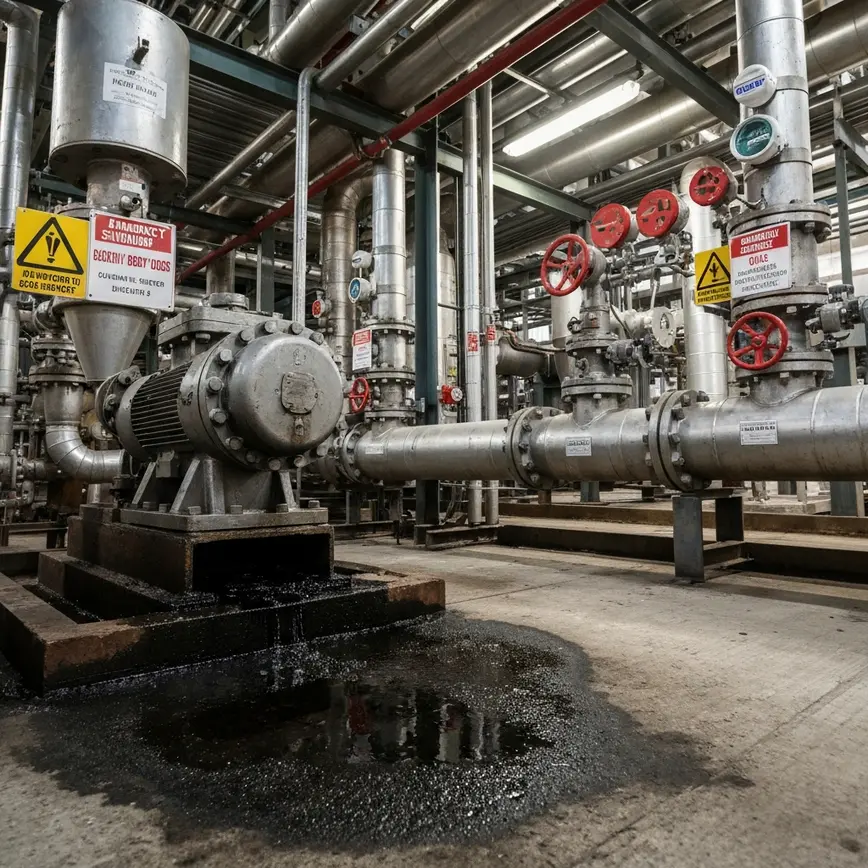
On March 1, 2026, a fire erupted at the charging pumps of the SEVIA unit at Ecuador’s largest refinery, the 110,000 barrel-per-day Esmeraldas facility operated by Petroecuador. This incident involved refinery charging pump fires in the unit that processes vacuum residue to produce fuel oil, highlighting ongoing vulnerabilities in handling viscous, flammable materials. Firefighters worked swiftly to control the blaze by 9:35 p.m. that same day, after operations were preemptively suspended for safety. Control and technical evaluations were initiated before any potential restart, though cause details remain unavailable at this time.
This marks the third fire at the Esmeraldas Refinery in just nine months, underscoring a troubling pattern of refinery charging pump fires and related hazards. Previous incidents occurred at the end of January 2026, with no injuries reported, and at the end of May 2025, where five people were treated for minor smoke inhalation effects and operations were halted for safety. These repeated events emphasize the critical need for robust preventive measures in high-risk processing units like SEVIA.
Core safety lesson
The technical failure in this case centered on potential overheating, leaks, or mechanical faults in the charging pumps handling viscous residues like vacuum residue, which can ignite flammable vapors or materials—a classic trigger for refinery charging pump fires.
The Hazard: Pump and fluid processing unit failures, including overheating, leaks, or mechanical faults in charging pumps, especially when processing combustible heavy fuels like vacuum residue.
The Control: Implement regular predictive maintenance using vibration analysis, thermal imaging, and oil analysis to detect early wear; install automatic pump shutdown systems triggered by abnormal temperature or pressure.
This control is non-negotiable because refinery charging pump fires can propagate rapidly in densely packed units, as evidenced by the three incidents at Esmeraldas in nine months. Predictive maintenance catches issues before they escalate, preventing the ignition of flammable vapors that could lead to operational shutdowns, injuries from smoke inhalation, or worse. Without it, mechanical faults go undetected, turning routine operations into high-consequence events.
Furthermore, automatic shutdown systems provide an immediate fail-safe, integrating with early-warning detectors to isolate hazards instantly. In environments processing vacuum residue, where leaks are insidious due to the material’s viscosity, these layered controls ensure compliance with industry standards and protect against the restart risks seen post-incident, such as human error during inspections.
Supervisor’s discussion guide
Engage your crew with these targeted questions to drive home the lessons from refinery charging pump fires:
Q1: “Looking at our own equipment today, where is the biggest risk of pump and fluid processing unit failures?”
Q2: “How do our current maintenance schedules compare to predictive tools like vibration analysis or thermal imaging?”
Q3: “What signs of refinery charging pump fires have we seen or prevented in the past month, and how?”
Q4: “If a fire started at our charging pumps, what fixed suppression systems would activate first, and are they inspected?”
Action plan & inspection
Immediately after this meeting, supervisors must verify and document the following 5 items:
- Inspect all charging pumps for signs of overheating, leaks, or mechanical wear using thermal imaging and vibration analysis tools.
- Confirm automatic pump shutdown systems are operational and tested, triggered by abnormal temperature or pressure thresholds.
- Review maintenance logs for the past 30 days on fluid processing units handling viscous residues, ensuring predictive oil analysis compliance.
- Check fixed fire suppression systems (deluge sprinklers, foam monitors) around high-risk pump areas for functionality and integration with gas/flame detectors.
- Conduct a quick walkdown of restart protocols, including leak tests and inerting procedures, for any units similar to SEVIA.
Key takeaways
Refinery charging pump fires, like the one at Esmeraldas on March 1, 2026, demonstrate how pump failures in processing vacuum residue can lead to rapid fire propagation and repeated operational disruptions. The core lesson is clear: proactive predictive maintenance—vibration analysis, thermal imaging, oil analysis—and automatic shutdowns are essential to detect and mitigate hazards before ignition. Fixed suppression systems and thorough post-incident root-cause analyses, such as HAZOP studies, further safeguard against recurrence, ensuring safe restarts without compromising personnel or production.
As supervisors, commit to these controls today. The pattern of three fires in nine months at one facility is a stark warning—do not let history repeat in 2026. Prioritize inspections, foster open discussions on risks, and enforce phased protocols to turn potential disasters into preventable near-misses.
Source & Disclaimer: This toolbox talk is for educational purposes based on public report. Read Original Report