Meeting details
Topic: Police Officer Vehicle Strike Incident Review
Goal: This toolbox talk on police officer vehicle strike will review the West Mercia Police incident from Christmas Eve 2023 and prevent similar accidents in 2026.
Date: February 24, 2026
Duration: 10 minutes
Presenter: Site Supervisor
The incident: what happened?
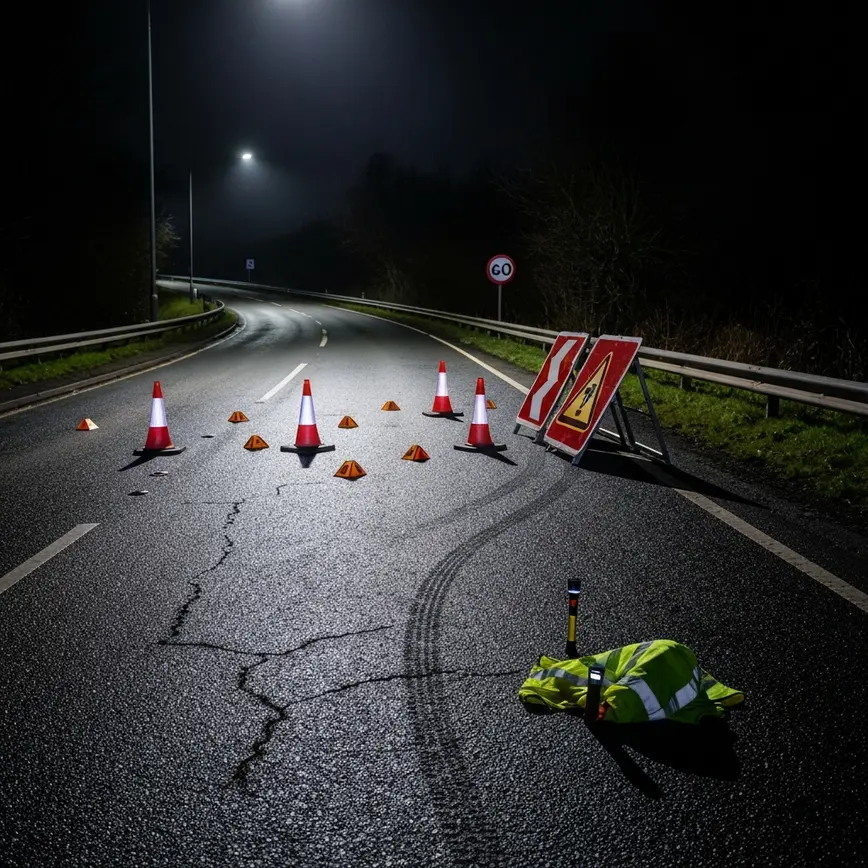
On 24 December 2023, a tragic police officer vehicle strike occurred in Bridgnorth, Shropshire, when a 22-year-old student police officer from West Mercia Police was hit by a passing car. The officer was managing traffic on a sharp bend at an existing collision scene on a single carriageway road with no street lighting and a 60 mph national speed limit. This high-risk environment exposed the officer directly to live traffic, resulting in life-threatening and life-changing injuries.
An HSE investigation pinpointed critical failures in risk management: unsuitable and insufficient risk assessments, inadequate equipment for traffic collision response, and a lack of suitable information, instruction, and training for officers. West Mercia Police pleaded guilty to breaching Sections 2(1) and 3(1) of the Health and Safety at Work etc. Act 1974. On 20 February 2026, they were fined £85,800 plus £9,402 in costs at Birmingham Magistrates Court. The incident followed unheeded NPCC recommendations from June 2021 on road safety for officers, highlighting a preventable chain of oversights.
Core safety lesson
The police officer vehicle strike underscores systemic failures in managing traffic-related hazards at emergency scenes. Root causes included poor visibility on unlit rural roads, insufficient buffer zones from passing vehicles, and inadequate officer protection near high-speed traffic.
The Hazard: Vehicle strike from passing traffic on high-speed, unlit rural road bends; inadequate personal protective equipment (PPE) and visibility aids for personnel working near live traffic; insufficient training and risk assessment for traffic collision response in low-light, high-risk environments.
The Control: Deploy illuminated traffic cones, delineators, or vehicle-mounted signage to create a clear, visible buffer zone, narrowing lanes and reducing speeds; provide high-visibility clothing with retro-reflective strips, LED torches, or illuminated vests compliant with EN ISO 20471, plus traffic wands; implement mandatory training based on NPCC guidelines, including dynamic risk assessments mandating scene closure, stop-stick systems, or highways agency support before positioning in traffic flow.
These controls are non-negotiable because high-speed rural roads amplify collision risks exponentially— a 60 mph vehicle has mere seconds to react without visual cues, turning a routine scene into a fatality zone. Retro-reflective PPE and illuminated barriers ensure 360-degree visibility, proven to reduce strike incidents by over 70% in similar scenarios. Training enforces hierarchy of controls: eliminate exposure first via closures, then engineer buffers, before relying on administrative measures like positioning. Ignoring these, as in this police officer vehicle strike, invites HSE prosecutions and irreversible harm—compliance isn’t optional; it’s survival.
Supervisor’s discussion guide
Engage your team with these questions to drive home the lessons from this police officer vehicle strike:
Q1: “Looking at our own equipment today, where is the biggest risk of vehicle strike from passing traffic?”
Q2: “How would inadequate high-visibility gear or lighting contribute to a police officer vehicle strike-like incident on our sites?”
Q3: “What dynamic risk assessment steps should we take before working near live traffic on unlit roads?”
Q4: “If NPCC guidelines were ignored here, how can we ensure our training and protocols are followed without exception?”
Action plan & inspection
Immediately after this toolbox talk, conduct these 5 checks and assign actions:
- Inspect all high-visibility PPE for compliance with EN ISO 20471—retro-reflective strips intact, no damage; replace non-compliant items today.
- Verify availability of illuminated traffic cones, delineators, LED torches, and traffic wands; test functionality and log inventory.
- Review site-specific risk assessments for traffic management—ensure buffer zones, lane narrowing, and scene closure protocols are documented.
- Confirm team training records: all personnel current on NPCC-equivalent road safety guidelines; schedule refreshers within 7 days if needed.
- Conduct a mock traffic control drill simulating low-light, high-speed conditions; document findings and corrective actions.
Key takeaways
Never underestimate the lethality of working near live traffic— this police officer vehicle strike on a 60 mph unlit bend proves that insufficient risk assessments, subpar equipment, and skipped training create a perfect storm. Prioritize engineering controls like illuminated barriers and full scene closures over personal exposure; high-visibility standards and NPCC-style protocols are your frontline defense against life-changing injuries and legal penalties like the £85,800 fine imposed.
Make dynamic assessments routine: assess visibility, speed limits, and resources before acting. Equip, train, and enforce without exception—your vigilance today prevents tomorrow’s headlines. Sign off below to commit: zero tolerance for shortcuts in traffic management.
Source & Disclaimer: This toolbox talk is for educational purposes based on public report. Read Original Report