Meeting details
Date: February 26, 2026
Topic: Concrete Cubing Machine Guarding and Related Hazards
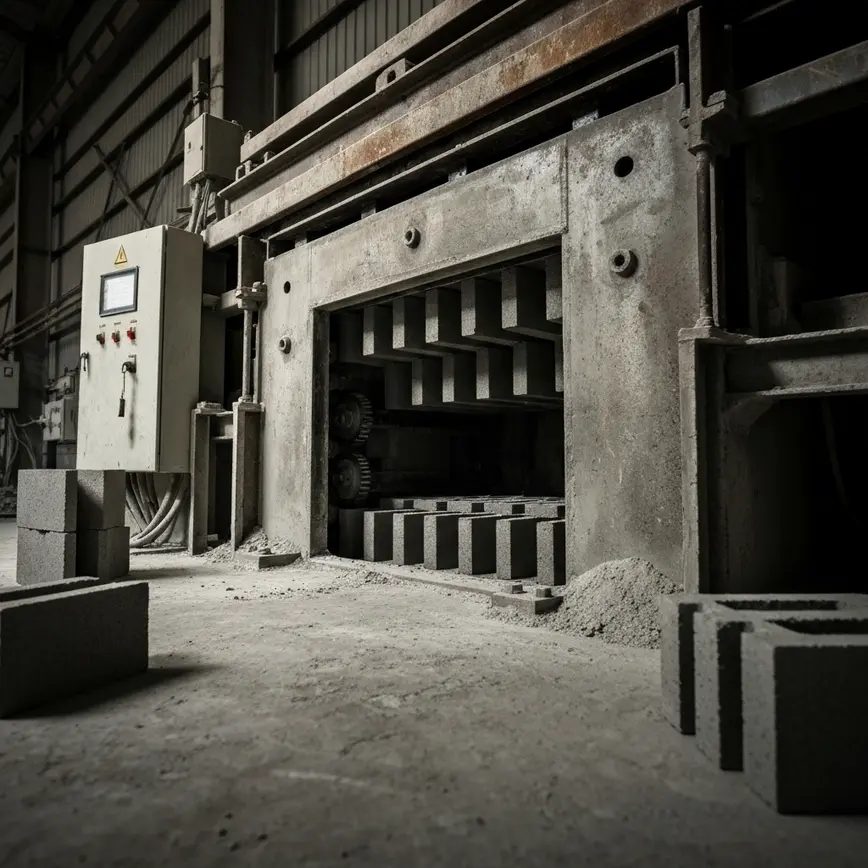
Goal: This toolbox talk on concrete cubing machine guarding will review the fatal injury at Adonel Concrete Corp. in Miami and prevent similar accidents in 2026.
The incident: what happened?
In July 2025, a tragic fatality occurred at Adonel Concrete Corp., operating as Adonel Block Manufacturing Corp., in Miami. A worker suffered fatal injuries after entering the unprotected area of a concrete block cubing machine, highlighting a critical failure in concrete cubing machine guarding. The machine’s hazardous moving parts were not properly safeguarded, allowing access during operation or maintenance. This incident prompted a thorough investigation by the US Department of Labor’s OSHA Atlanta Region (Release Number: 26-41-ATL), resulting in nine serious violations cited against the company.
OSHA’s citations included inadequate machine guarding on the concrete block cubing machine, failure to ensure lockout/tagout (LOTO) procedures, unmarked electrical panels with non-operational locking mechanisms, lack of an effective hearing conservation program for high-noise exposure areas, and failure to incorporate silica hazards into the hazard communication program. The total penalties assessed amounted to $58,604. These violations collectively created an environment where hazardous energy could be released unexpectedly, electrical risks were unmanaged, and workers were exposed to noise and respirable silica without proper protections or awareness.
Core safety lesson
The technical failure at the heart of this incident was the absence of proper concrete cubing machine guarding, compounded by inadequate LOTO procedures and other systemic deficiencies. Workers must never enter hazardous machine areas without verified isolation of energy sources.
The Hazard: Unprotected access to moving parts in a concrete cubing machine, combined with uncontrolled hazardous energy from electrical sources, leading to crush injuries or fatalities. Additional risks included electrical shock from unmarked panels, hearing loss from excessive noise, and silica dust inhalation without hazard communication.
The Control: Install fixed or interlocked guards on concrete cubing machines to prevent access to moving parts during operation (OSHA 1910.212); implement a written LOTO program with training, specific procedures, and verification (OSHA 1910.147); label electrical panels clearly with functional locks (OSHA 1910.303); establish hearing conservation programs; and integrate silica hazards into hazard communication training.
Concrete cubing machine guarding is non-negotiable because these machines operate with immense force, cubing heavy concrete blocks at high speeds—any unguarded entry point invites instant catastrophe. LOTO ensures zero energy state before entry, preventing unexpected startups that have killed countless workers. Electrical panels must be marked and locked to avoid accidental energization, while noise and silica programs protect long-term health. Skipping these controls isn’t a shortcut; it’s a guarantee of violations, fines, and worse—lost lives. As supervisors, enforcing these daily builds a culture where safety overrides production pressure every time.
Supervisor’s discussion guide
Use these questions to engage the crew in a 10-minute discussion. Encourage honest input and note responses for follow-up.
- Q1: “Looking at our own equipment today, where is the biggest risk of inadequate concrete cubing machine guarding?”
- Q2: “Have you ever seen or experienced a situation where LOTO procedures were skipped on similar machines? What happened?”
- Q3: “How do unmarked electrical panels or non-functional locks create dangers during maintenance on our site?”
- Q4: “What steps can we take right now to ensure silica and noise hazards are covered in our daily hazard communication?”
Action plan & inspection
Immediately after this meeting, conduct these 5 checks and document findings. Assign owners and due dates.
- Inspect all concrete cubing machines for fixed or interlocked guards; repair or install any deficiencies per OSHA 1910.212.
- Verify written LOTO program exists, with training records current and specific procedures posted at each machine.
- Check all electrical panels: ensure clear labeling, operational locking mechanisms, and restricted access.
- Audit hearing conservation program for noise-exposed areas, including audiometric testing and engineering controls.
- Review hazard communication program to confirm silica hazards are documented, with updated SDS and worker training.
Key takeaways
The fatal incident at Adonel Concrete Corp. underscores that concrete cubing machine guarding is the first line of defense against deadly machine hazards. Combined with robust LOTO, properly managed electrical panels, and comprehensive programs for noise and silica, these controls form an unbreakable safety barrier. Never compromise—unguarded machines and unchecked energy sources turn routine tasks into tragedies, as seen with the $58,604 in OSHA penalties and a worker’s life lost.
As we move forward in 2026, commit to zero tolerance for these violations. Supervisors: lead inspections, train relentlessly, and report issues immediately. Crew: speak up on risks, follow procedures without exception. This toolbox talk isn’t just words—it’s your blueprint to send everyone home safe, preventing Miami’s nightmare from repeating on our site.
Source & Disclaimer: This toolbox talk is for educational purposes based on public report. Read Original Report