Meeting details
Topic: Unguarded Conveyor Safety in Clinical Waste Facilities
Goal: This toolbox talk on unguarded conveyor safety will review the incident involving an unguarded conveyor at SRCL Limited and prevent similar accidents in 2026.
The incident: what happened?
On 17 June 2026 the HSE reported that SRCL Limited was fined £300150 after an 18-year-old employee at its clinical waste facility in Oldham suffered a fractured leg when he became entangled in an unguarded conveyor. The incident occurred because the conveyor lacked adequate fixed guarding, allowing the young worker to come into direct contact with moving parts during routine operations. This failure directly breached machinery safety requirements and resulted in serious injury to the teenager.
Investigators found that the conveyor had been operating without the necessary physical barriers or interlocked guards that would have prevented access to the hazard zone. The company was prosecuted under the Provision and Use of Work Equipment Regulations for failing to ensure the equipment was safe. The substantial fine reflects both the severity of the injury and the preventable nature of the unguarded conveyor safety lapse.
Core safety lesson
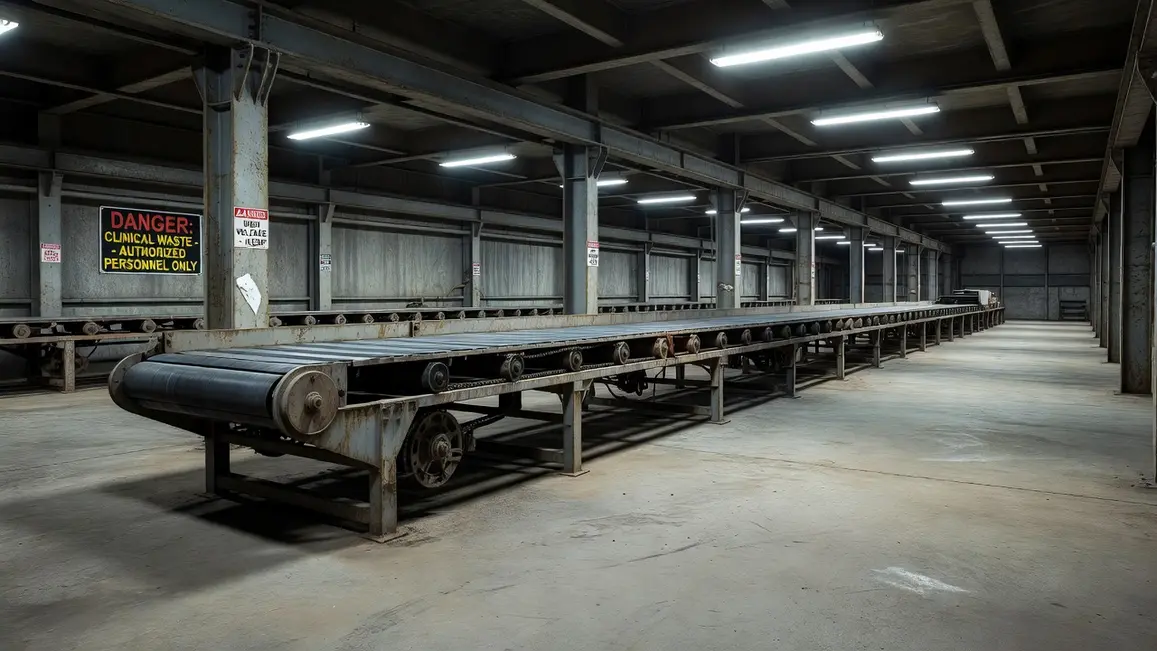
The Hazard: Unguarded moving conveyor belts and rollers.
The Control: Fixed, robust guarding that prevents any access to nip points, rollers and drive mechanisms.
Fixed guarding is non-negotiable because conveyors create powerful shear and crush forces that can cause life-changing injuries in seconds. Once a worker’s clothing or limb is drawn into an unguarded section there is often no time to react, regardless of training or experience. In this case the absence of guarding allowed an 18-year-old employee to sustain a fractured leg that could have been entirely avoided by the installation of simple, compliant barriers.
Regular inspection and maintenance of guards are equally critical. Guards that are removed for cleaning or maintenance must be replaced and verified before the equipment is returned to service. Relying on administrative controls or worker behaviour alone has repeatedly proven inadequate; only physical guarding provides the reliable separation between people and the hazard that unguarded conveyor safety demands.
Supervisor’s discussion guide
Q1: “Looking at our own equipment today, where is the biggest risk of contact with moving machinery parts?”
Q2: “Are all conveyor guards in place, secure and free from damage or missing sections?”
Q3: “What is our procedure when a guard must be removed for maintenance, and how do we confirm it is replaced before restart?”
Q4: “How can we improve daily checks to ensure unguarded conveyor safety issues are identified and corrected immediately?”
Action plan & inspection
- Walk the full length of every conveyor and confirm all fixed guards are securely fitted and correctly aligned.
- Check that interlocked guards, where fitted, function correctly and stop the conveyor when opened.
- Verify that any access points for cleaning or maintenance have been properly reinstated and secured.
- Review the last formal inspection records for each conveyor and note any outstanding remedial actions.
- Ensure warning signage and emergency stop devices remain clearly visible and fully operational.
Key takeaways
Every conveyor must be treated as a serious hazard until guarding is confirmed to be complete and effective. The SRCL Limited case demonstrates that even a single missing guard can lead to serious injury, prosecution and a fine exceeding £300000. Supervisors and operatives share responsibility for never allowing equipment to run in an unguarded state.
Immediate verification of guarding after any maintenance, combined with daily visual checks, is the minimum standard required to protect workers. Maintaining unguarded conveyor safety is not optional; it is a legal duty that prevents life-altering injuries and keeps sites compliant.
Source & Disclaimer: This toolbox talk is for educational purposes based on public report. Read Original Report