Meeting details
Date: April 01, 2026
Topic: Trench Cave-in Protection Essentials
Goal: This toolbox talk on trench cave-in protection will review the Yarmouth Trench Collapse and prevent similar accidents in 2026.
The incident: what happened?
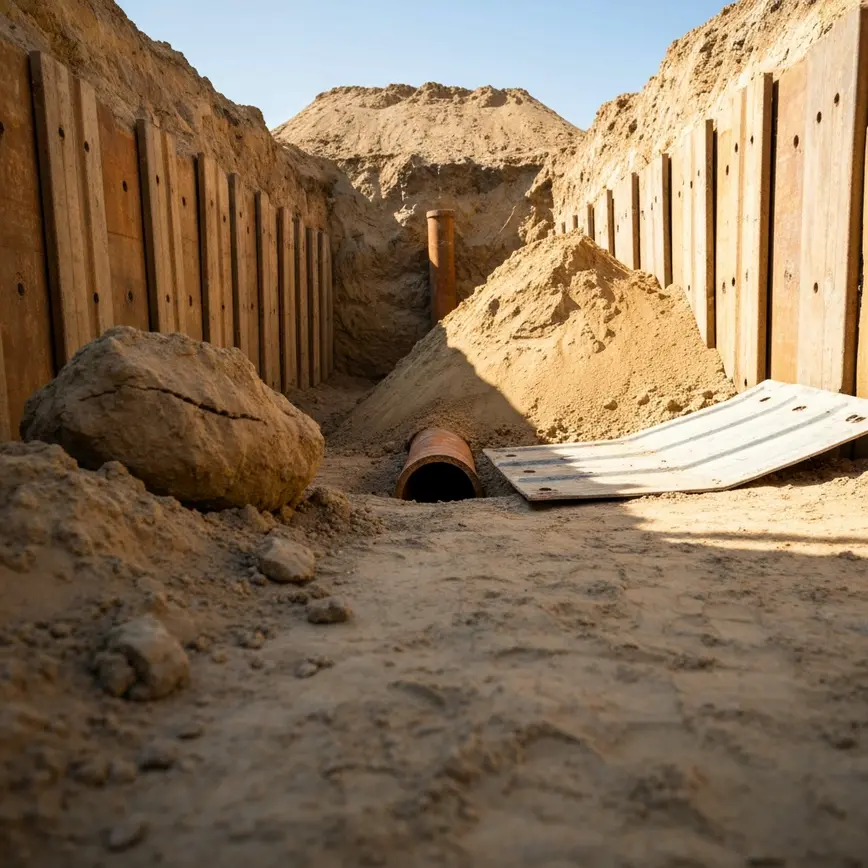
On November 18, 2025, at a worksite in Yarmouth, Massachusetts, a trench collapse occurred during water and sewer line work by Revoli Construction Co. Inc. The backfilled sand caved in, trapping two workers who were removing sandy soil and installing steel plates outside the trench. Critical failures in trench cave-in protection left the walls unsupported, leading to the collapse that engulfed one worker, resulting in a fatal injury, while the second worker suffered serious injuries. This incident underscores how lapses in basic excavation safety can turn routine tasks deadly.
The OSHA investigation revealed severe shortcomings, issuing 7 willful violations, 33 repeat violations, and 17 serious violations, with proposed penalties totaling $4,699,362. Key issues included no adequate cave-in protection, lack of safe egress, spoil piles placed within 2 feet of the edge, unsupported underground utilities, damaged protective systems, and additional hazards like electrical and fall risks. These combined failures not only caused the collapse but highlighted a pattern of non-compliance that supervisors must address head-on.
Core safety lesson
The technical failure in this incident boiled down to inadequate safeguards against soil instability in excavations. Trench walls, composed of sandy soil prone to shifting, were not protected, allowing the cave-in to occur rapidly and without warning.
The Hazard: Trench cave-ins, which can happen suddenly in any excavation 5 feet or deeper, or shallower if evidence of instability exists, due to soil pressure, water saturation, or vibration.
The Control: Implement trench cave-in protection systems such as sloping, benching, shielding, or shoring per OSHA 29 CFR 1926.652, ensuring daily inspections and proper maintenance.
Trench cave-in protection is non-negotiable because a single cubic yard of soil can weigh over 3,000 pounds, enough to crush and suffocate instantly—fatality rates exceed 70% in engulfments. Unlike other hazards, cave-ins give no audible warning, and rescue is often too late. Supervisors must enforce these controls rigorously, as seen in Yarmouth where violations like damaged systems and poor spoil placement amplified risks. Compliance isn’t optional; it’s the line between life and tragedy.
Moreover, integrating trench cave-in protection with egress ladders every 25 feet, spoil piles at least 2 feet back, and utility supports creates layered defenses. Skipping any element, as in this case, invites catastrophe—OSHA’s massive penalties reflect the preventable nature of these failures.
Supervisor’s discussion guide
Engage your crew with these questions to drive home the lessons:
Q1: “Looking at our own equipment today, where is the biggest risk of trench cave-in?”
Q2: “How close are our spoil piles to any excavation edges, and what does OSHA require?”
Q3: “What steps do we take daily to inspect for damaged shoring or shielding in trench cave-in protection systems?”
Q4: “If we spot unsupported utilities, what’s our immediate action plan?”
Action plan & inspection
Conduct these 5 checks immediately after this meeting:
- Inspect all trenches 4 feet or deeper for proper cave-in protection (sloping, shoring, shielding) per 29 CFR 1926.652.
- Verify safe egress with ladders or ramps within 25 feet of every worker (29 CFR 1926.651(c)).
- Measure spoil piles and equipment distance—must be at least 2 feet from edges (29 CFR 1926.651(j)(2)).
- Locate, expose, and support all underground utilities before digging (29 CFR 1926.651(b)).
- Examine protective systems for damage and replace any compromised components immediately (29 CFR 1926.652).
Key takeaways
Trench cave-in protection is the cornerstone of excavation safety—without it, as in the Yarmouth collapse, sandy soils and minor disturbances can lead to fatal engulfments. Remember the stats: 7 willful, 33 repeat, and 17 serious violations cost over $4.6 million, but more importantly, lives. Enforce sloping, shoring, shielding, egress, and spoil placement every time; daily inspections catch issues before they kill.
Make this your mantra: No trench work without verified controls. Supervisors, lead by example—review plans, train crews, and halt unsafe work. In 2026, zero tolerance for shortcuts ensures we all go home safe.
Source & Disclaimer: This toolbox talk is for educational purposes based on public report. Read Original Report