Meeting details
Topic: Roof Fall Protection: Lessons from DME Construction Fatal Incident
Goal: This toolbox talk on roof fall protection will review the 2021 fatal fall at the Oyster Bay municipal building worksite by DME Construction Associates Inc. and prevent similar accidents in 2026.
The incident: what happened?
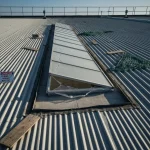
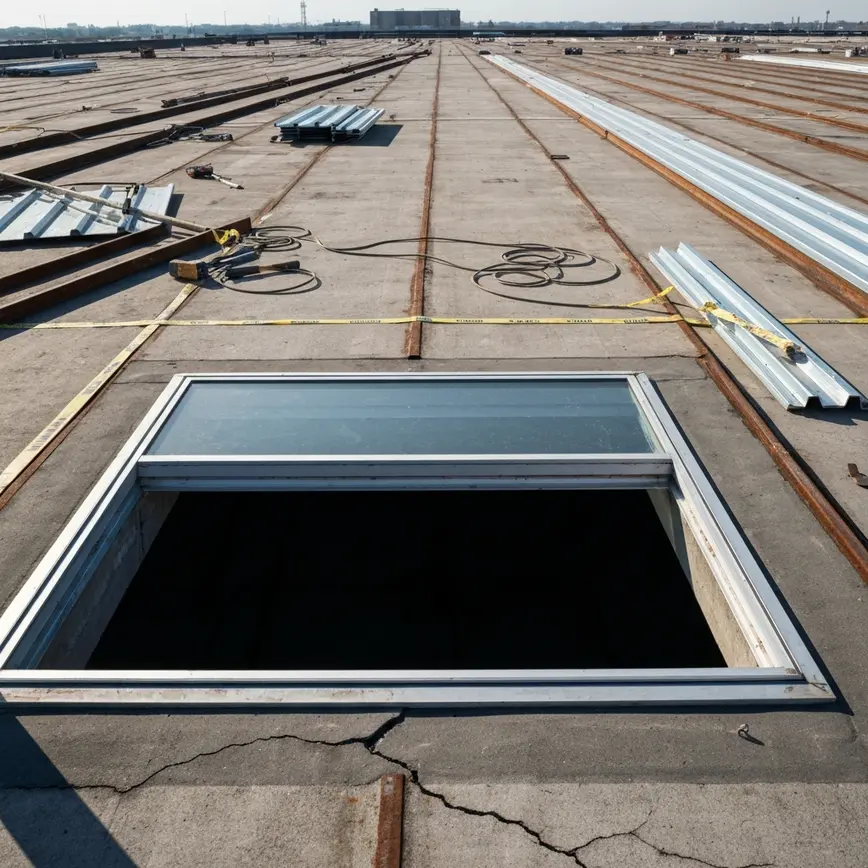
In August 2021, at the Oyster Bay municipal building on Long Island, New York, DME Construction Associates Inc., a roofing contractor, was performing steel roof decking replacement work. Workers were exposed to falls of up to 22 feet from unguarded roof openings and edges, with zero roof fall protection in place for any of the eight employees on the roof. Tragically, one employee suffered fatal injuries after plummeting 18 feet through an unprotected skylight, highlighting a catastrophic failure in basic roof fall protection measures.
OSHA’s investigation uncovered nine willful violations, including eight egregious per-instance citations for failing to provide fall protection to each of the eight roof workers. The company entered a settlement agreement with the U.S. Department of Labor, agreeing to pay a $600,000 penalty and implement enhanced safety measures such as a written safety plan, sufficient fall protection equipment, advance notification to OSHA for inspections, warrantless OSHA entry rights, and mandatory 30-hour OSHA training for supervisors. In November 2025, company owner Peter Chardon pleaded guilty to a criminal violation of the Occupational Safety and Health Act, with sentencing scheduled for April 2026.
Core safety lesson
The technical failure at this site stemmed from completely ignoring OSHA standards for working at heights over 6 feet, specifically leaving roof openings like skylights unguarded and roof edges unprotected during roofing operations.
The Hazard: Unguarded roof openings (e.g., skylights) and unprotected roof edges pose extreme risks of falls from heights up to 22 feet, as seen in this fatal 18-foot plunge through a skylight.
The Control: For unguarded roof openings like skylights, install covers capable of supporting at least twice the weight of workers and equipment, or deploy personal fall arrest systems (PFAS) including full-body harnesses, shock-absorbing lanyards, and anchors secured to structural points per OSHA 1926.501(b)(4). For unprotected roof edges, erect guardrail systems (42-inch top rails, midrails, and toeboards) or use warning line systems with safety monitoring for roofing work over 6 feet, as mandated by OSHA 1926.501(b)(1) and (b)(10). Additionally, provide 100% tie-off PFAS for all workers 6+ feet above lower levels, with daily equipment inspections and proper training under OSHA 1926.502(d).
Roof fall protection is non-negotiable because falls remain the leading cause of death in construction, and willful neglect—as in this case with nine OSHA violations—leads to irreversible tragedy, massive fines, criminal charges, and long-term business restrictions. Supervisors must enforce these controls every shift; shortcuts like skipping harness inspections or leaving edges bare create a false sense of security that evaporates in seconds during a misstep. Implementing robust roof fall protection not only complies with law but builds a culture where every worker returns home safely, avoiding the devastating ripple effects seen here on families, crews, and communities.
Supervisor’s discussion guide
Engage your crew with these four targeted questions to drive home the roof fall protection lessons:
Q1: “Looking at our own site today, where is the biggest risk of falls from unguarded roof openings or edges?”
Q2: “What specific roof fall protection equipment do we have on hand, and has it all been inspected this week?”
Q3: “How would you respond if you saw a coworker working near a roof edge without a harness—walk us through your stop-work authority.”
Q4: “Based on the DME incident, what one change can we make tomorrow to ensure 100% compliance with OSHA fall protection standards?”
Action plan & inspection
Immediately after this toolbox talk, conduct these five mandatory checks and implement actions:
- Inspect all roof openings and skylights for secure covers rated to support twice worker/equipment weight; cover any deficiencies before resuming work.
- Verify guardrails on all roof edges meet OSHA specs (42-inch height, midrails, toeboards) or deploy warning lines with monitoring systems.
- Inventory full-body harnesses, lanyards, and anchors for all roof workers—ensure 100% availability, inspect for damage, and log results.
- Review and update site-specific roof fall protection plan, including training records for 30-hour OSHA certification where required.
- Post clear signage at all access points warning of fall hazards and mandatory PFAS use; notify OSHA in advance if high-risk roofing starts.
Key takeaways
Roof fall protection is the unbreakable line between routine roofing work and fatal tragedy, as proven by the DME Construction Associates incident where an 18-foot fall through an unprotected skylight claimed a life amid 22-foot exposure risks and zero safeguards for eight workers. OSHA’s nine willful violations, $600,000 penalty, and criminal guilty plea by the owner underscore that ignorance or cost-cutting invites severe legal and human consequences—never compromise on guardrails, covers, or PFAS.
Commit today to zero-tolerance enforcement: daily inspections, full training, and proactive hazard ID will shield your crew in 2026 and beyond. Remember, effective roof fall protection saves lives, preserves livelihoods, and upholds our duty as safety leaders.
Source & Disclaimer: This toolbox talk is for educational purposes based on public report. Read Original Report