Meeting details
Topic: Reversing vehicle safety briefing following the 2026 HSE prosecution
Goal: This toolbox talk on reversing vehicle safety will review the serious injuries sustained by a 58-year-old employee at Jack Moody Landscaping and Civil Engineering Limited and prevent similar accidents in 2026.
The incident: what happened?
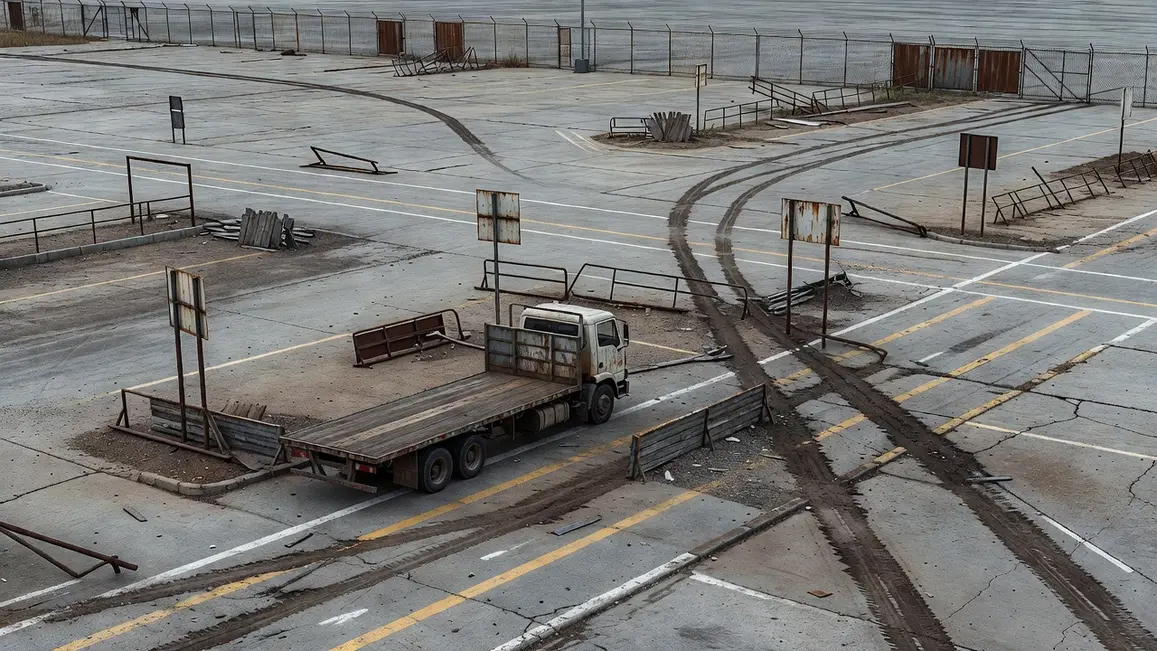
On 22 September 2017 at the Hollybush Farm site in Wolverhampton, a 58-year-old employee of Jack Moody Landscaping and Civil Engineering Limited suffered life-changing head injuries, eyesight damage and psychological trauma when struck by a reversing flat-bed truck. The HSE investigation found that reversing vehicle safety had been completely overlooked: the site had no clearly demarcated pedestrian routes, no instructions for drivers on safe manoeuvring, and no adequate arrangements to protect pedestrians during reversing operations. Nearly one-quarter of workplace transport fatalities occur during reversing manoeuvres, a statistic that proved tragically relevant in this case.
The company was convicted under Section 2(1) of the Health and Safety at Work etc Act 1974 and fined £125,000 plus £150,000 costs at Wolverhampton Crown Court in June 2026. The absence of basic reversing vehicle safety measures turned a routine site movement into a life-altering event, highlighting how easily such incidents can occur when controls are missing.
Core safety lesson
The Hazard: Uncontrolled reversing of large vehicles in areas shared with pedestrians.
The Control: Implement one-way traffic systems and drive-through loading/unloading positions to eliminate the need for reversing wherever practicable.
Reversing is inherently dangerous because drivers have limited visibility and pedestrians can easily enter blind spots. When a site allows large vehicles to reverse freely among workers, the probability of collision rises sharply. The HSE explicitly linked the lack of one-way systems and drive-through arrangements to the injuries sustained at Hollybush Farm.
Eliminating reversing removes the hazard at source rather than relying on last-minute warnings. Where reversing cannot be avoided, additional controls such as banksmen or CCTV become essential, but the primary objective must always be to design reversing out of the operation. This hierarchy of control is non-negotiable because the consequences of failure are permanent and severe.
Supervisor’s discussion guide
Q1: “Looking at our own equipment today, where is the biggest risk of uncontrolled reversing of large vehicles in areas shared with pedestrians?”
Q2: “Do we have clearly marked pedestrian routes that physically separate people from vehicle paths on this site?”
Q3: “How do we currently brief visiting drivers on our reversing procedures, and is that briefing documented?”
Q4: “What additional reversing vehicle safety measures, such as one-way systems or banksmen, could we introduce immediately?”
Action plan & inspection
- Walk the entire site and confirm all pedestrian routes are clearly marked with barriers or kerbs.
- Verify that one-way traffic systems or drive-through positions are in place for all regular vehicle movements.
- Check that written reversing procedures are available and that every driver has received a site induction.
- Inspect all reversing aids (mirrors, cameras, sensors) on site vehicles and confirm they are fully operational.
- Confirm that banksmen or equivalent controls are assigned wherever reversing cannot be eliminated.
Key takeaways
Reversing vehicle safety must be engineered into every site layout from the outset. The Hollybush Farm incident demonstrates that missing demarcated routes, driver instructions and pedestrian protection can result in life-changing injuries and substantial legal penalties. Supervisors are responsible for ensuring these controls are actively maintained rather than assumed to be in place.
Regular inspection and immediate correction of any gaps in reversing vehicle safety arrangements will protect both workers and the company. The lessons from this £275,000 fine must translate into daily practice across all operations in 2026 and beyond.
Source & Disclaimer: This toolbox talk is for educational purposes based on public report. Read Original Report