Meeting details
Topic: Preventing Recycling Plant Fire Hazards
Date: March 27, 2026
Goal: This toolbox talk on recycling plant fire will review the recent incident at the SA Recycling facility in Nashville, Tennessee, and equip supervisors with strategies to prevent similar accidents in 2026.
The incident: what happened?
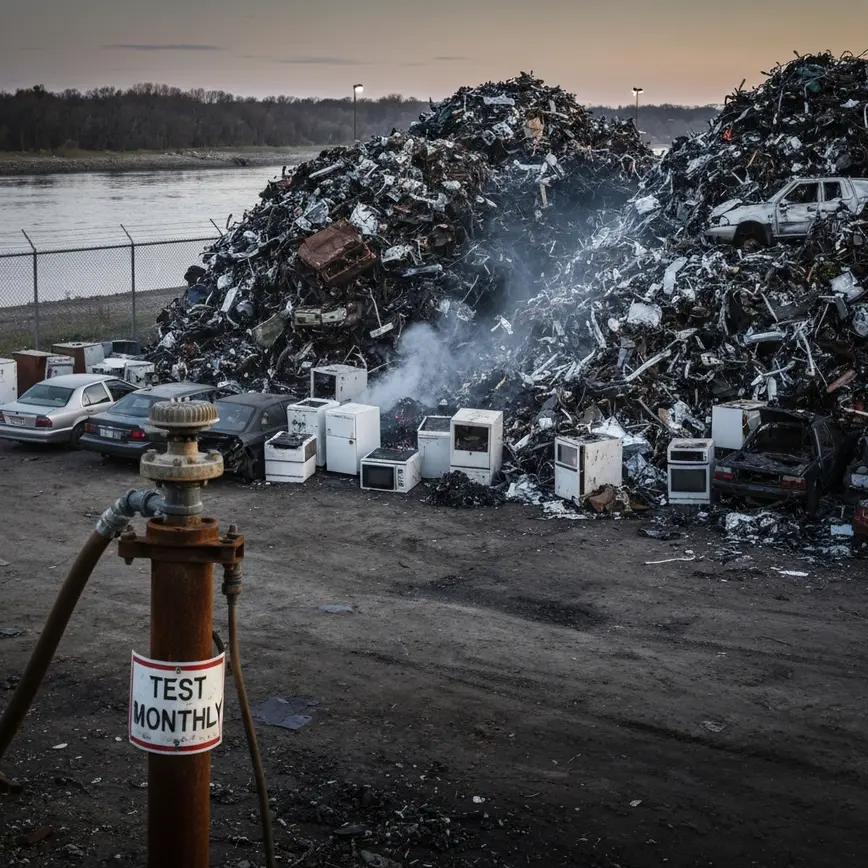
On Monday, March 16, 2026, a recycling plant fire broke out at the SA Recycling facility located on Linder Industrial Drive in The Nations neighborhood near the Cumberland River in Nashville, Tennessee. The fire originated from a pile of crushed vehicles, producing massive plumes of smoke and flames that were captured by Tennessee Department of Transportation (TDoT) cameras and visible from Briley Parkway. Residents in the area reported a strong odor in the air, highlighting the widespread impact of the incident.
The Nashville Fire Department responded promptly to the outside fire, working to contain it and prevent spread to surrounding stored materials, including steel, aluminum, copper, appliances, and junk cars. The fire was fully extinguished by around 10 p.m., with no injuries or evacuations reported. An investigation into the cause remains ongoing, underscoring the need for proactive measures in scrap yards and recycling operations to mitigate such risks.
Core safety lesson
The recent recycling plant fire at SA Recycling exposed multiple interconnected failures in fire prevention, primarily centered on combustible material accumulation, uncontrolled ignition sources, and inadequate fire suppression for outdoor storage. These elements combined to create a high-risk environment where a single ignition point could lead to rapid escalation.
The Hazard: Accumulation of combustible materials like piles of crushed vehicles and scrap metals (steel, aluminum, copper), coupled with potential sparks from machinery, hot work, or electrical faults, and insufficient suppression systems for large outdoor piles.
The Control: Implement strict pile size limits, segregation of flammable materials, and housekeeping per NFPA 654; require hot work permits, daily pre-shift equipment inspections, and spark detection/suppression; install fixed water monitors, foam systems, or deluge sprinklers with regular testing and backup power per NFPA 1142.
These controls are non-negotiable because scrap recycling operations inherently involve highly combustible, irregularly shaped materials that can trap heat and oxygen, fueling self-sustaining fires even after initial extinguishment efforts. Without enforced pile limits and segregation, fires spread uncontrollably, as seen in this recycling plant fire, endangering nearby structures, air quality, and response personnel. Daily inspections and permits eliminate ignition sources proactively, while tested suppression systems ensure rapid knockdown, reducing downtime, environmental impact, and liability—proven essentials in NFPA standards developed from decades of similar incidents.
Supervisor’s discussion guide
Engage your crew with these targeted questions to drive home the recycling plant fire lessons:
Q1: “Looking at our own equipment and storage today, where is the biggest risk of combustible material accumulation like the crushed vehicle piles in Nashville?”
Q2: “What ignition sources—such as hot work or faulty equipment—have we seen on site recently, and how can we prevent them?”
Q3: “How effective would our current fire suppression setup be against a large outdoor scrap pile fire, and what improvements are needed?”
Q4: “If a recycling plant fire started here right now, what’s our first containment action, and who ensures housekeeping protocols are followed daily?”
Action plan & inspection
Immediately after this toolbox talk, conduct these 5 mandatory checks and implement actions:
- Inspect all scrap piles for size limits (no larger than [site-specific height, e.g., 15 ft]) and segregate flammables per NFPA 654.
- Review and issue hot work permits for any ongoing operations; perform pre-shift inspections on all machinery for sparks or electrical faults.
- Test fire suppression systems, including fixed water monitors or foam deluge, verifying backup power functionality.
- Conduct a full site housekeeping audit, removing debris and ensuring clear access lanes around storage areas.
- Document findings, assign corrective actions with deadlines, and schedule follow-up inspection within 7 days.
Key takeaways
A recycling plant fire like the one at SA Recycling in Nashville demonstrates how quickly combustible scrap piles can ignite and spread without rigorous controls. Key lessons include enforcing pile size limits, daily equipment checks, and robust suppression systems—non-negotiable per NFPA standards—to protect lives, property, and operations. Supervisors must lead by example, integrating these into daily routines to eliminate hazards before they escalate.
Proactive prevention trumps reactive response: no injuries occurred here, but complacency invites disaster. Commit to these actions today, review them weekly, and foster a culture where every crew member reports fire risks immediately. This approach ensures your site avoids the smoke, odors, and investigations that plagued this incident.
Source & Disclaimer: This toolbox talk is for educational purposes based on public report. Read Original Report