Meeting details
Date: March 20, 2026
Topic: Feed Mill Dust Explosion Hazards and Prevention
Goal: This toolbox talk on feed mill dust explosion will review the Perdue Feed Mill explosion in Cofield, North Carolina, and prevent similar accidents in 2026.
The incident: what happened?
On Saturday, February 21, at 2:15 a.m., a devastating feed mill dust explosion rocked the Perdue feed mill in Cofield, North Carolina, with four employees onsite at the time. The blast triggered a massive fire that severely compromised the building’s structural integrity, made worse by deteriorating weather conditions. One employee was airlifted to the hospital with serious injuries, another was treated for non-life-threatening injuries and released, and a third received treatment at the scene. Tragically, the fourth employee went missing after the explosion.
The missing worker was not found until the next day, Sunday, February 22, more than 24 hours later, after specialized equipment was used to stabilize the unstable structure for safe search operations. Investigators are still determining the exact cause, but Perdue AgriBusiness confirmed the death, expressed condolences to the family, and stated the facility will remain closed until further notice while fully cooperating with local authorities, including the Hertford County spokesperson.
Core safety lesson
The technical failure in this incident highlights the deadly risks associated with combustible grain dust in feed mills. A feed mill dust explosion occurs when fine grain dust particles suspended in the air ignite, creating a rapid pressure wave and fireball that can level structures and endanger lives.
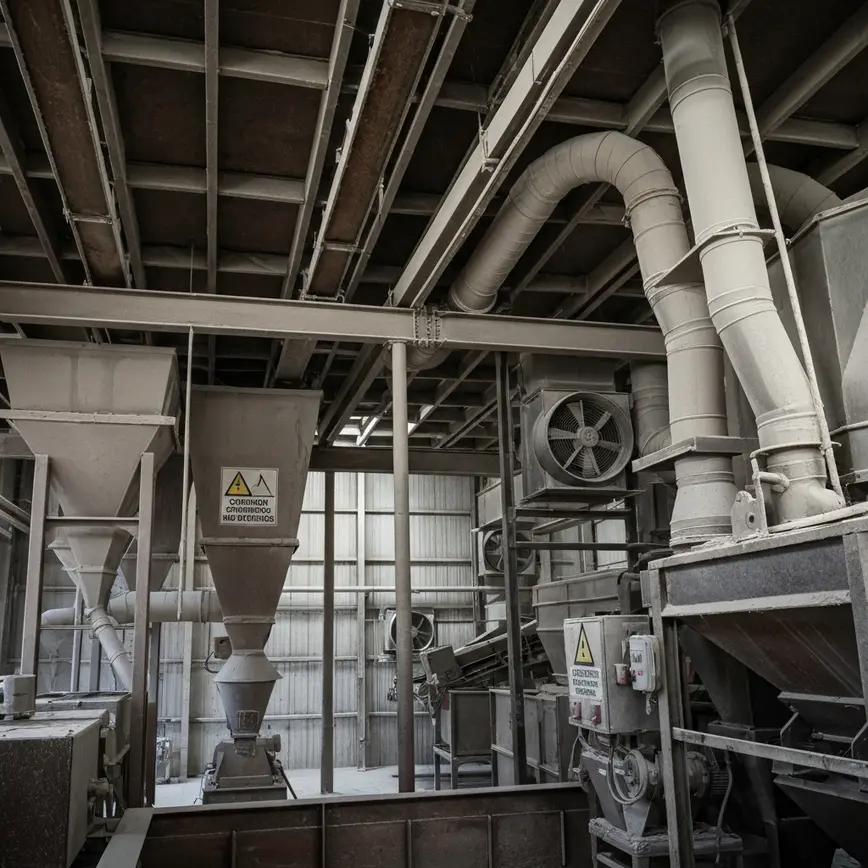
The Hazard: Dust explosion hazard, common in feed mills due to combustible grain dust accumulation from processing operations.
The Control: Implement regular housekeeping and dust collection systems with explosion-proof ventilation, per NFPA 654 standards, including periodic dust hazard analysis.
These controls are non-negotiable because unchecked dust buildup creates an explosive atmosphere that a single spark—from equipment, static electricity, or hot surfaces—can ignite. NFPA 654 mandates comprehensive dust hazard analyses to identify ignition sources and accumulation points, ensuring proactive mitigation. Without rigorous housekeeping, like vacuuming overhead beams and ledges weekly, and explosion-proof systems that vent pressure safely, facilities remain ticking time bombs, as seen in the Perdue incident where structural collapse delayed rescue.
Structural collapse risk post-explosion and delayed rescue further underscore the need for pre-planned shoring protocols, rapid accountability systems like electronic check-in/out, and mutual aid for stabilization equipment. Supervisors must enforce these daily to protect crews from the chain reaction of a feed mill dust explosion.
Supervisor’s discussion guide
Engage your crew with these questions to drive home the lessons:
Q1: “Looking at our own equipment today, where is the biggest risk of combustible dust accumulation?”
Q2: “How often do we perform housekeeping on overhead surfaces, and what changes could prevent a feed mill dust explosion here?”
Q3: “What would our response be if a structure became unstable after an incident—do we have accountability systems in place?”
Q4: “Review our dust collection systems: Are they explosion-proof and maintained per NFPA 654?”
Action plan & inspection
Immediately after this meeting, conduct these 5 checks and document findings:
- Inspect all work areas for grain dust accumulation on beams, ledges, floors, and equipment—clean to less than 1/32 inch depth.
- Test and verify explosion-proof ventilation and dust collection systems are operational and maintained per NFPA 654.
- Conduct a quick dust hazard analysis walkthrough, noting potential ignition sources like sparks or hot surfaces.
- Review electronic check-in/out systems and emergency response plans for rapid accountability and mutual aid contacts.
- Assess structural elements for fire-resistant compartmentalization and pre-identify shoring equipment locations.
Key takeaways
A feed mill dust explosion, like the one at Perdue’s Cofield facility, demonstrates how combustible dust can turn routine operations into catastrophes. Key lessons include prioritizing aggressive housekeeping, explosion-proof engineering controls, and structural safeguards to interrupt the dust explosion pentagon: fuel, oxygen, ignition, dispersion, and confinement. Supervisors must lead by example, enforcing daily inspections to eliminate hazards before they escalate.
Delayed rescues due to unstable structures remind us that prevention saves lives—implement rapid accountability, train on collapse protocols, and foster a culture of zero tolerance for dust buildup. By acting on these controls today, we honor the fallen and ensure our sites remain safe in 2026 and beyond.
Source & Disclaimer: This toolbox talk is for educational purposes based on public report. Read Original Report