Meeting details
Topic: Conveyor Guarding Controls for Waste and Recycling Operations
Goal: This toolbox talk on conveyor guarding controls will review the Bateman Skips Ltd incident and prevent similar accidents in 2026.
The incident: what happened?
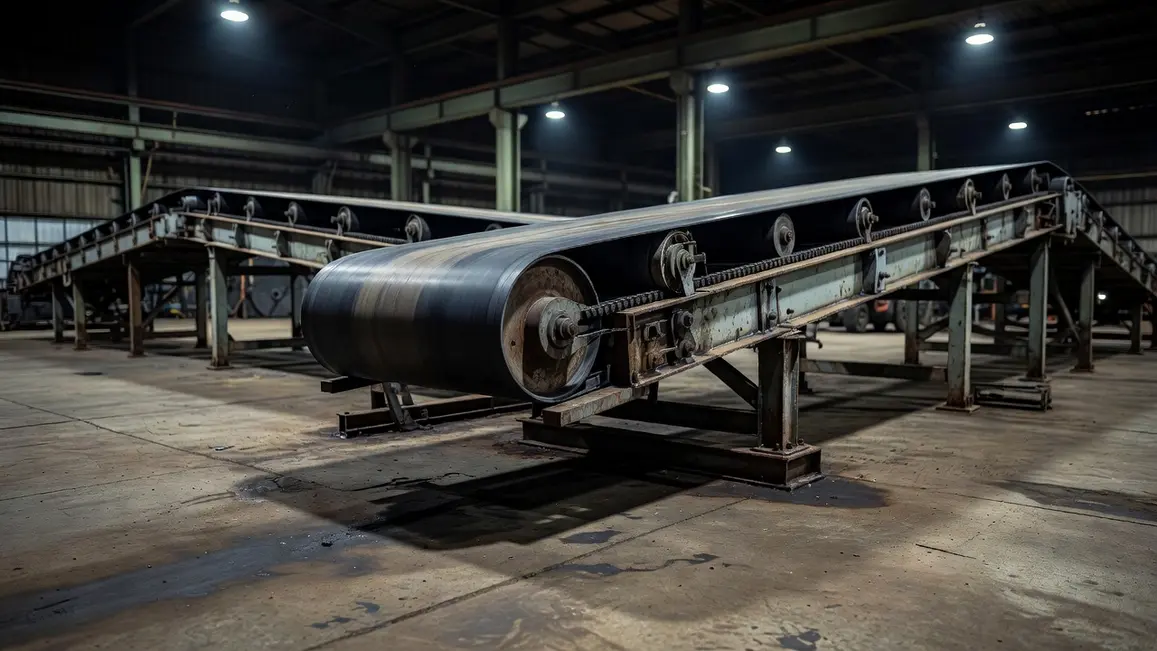
On 27 January 2024 at Bateman Skips Ltd’s Bristol waste and recycling facility, a worker slipped while attempting to clear a blockage on a conveyor system. The worker’s arm contacted the unguarded tail-end of the moving belt, resulting in crush injuries that caused bone fractures, severe lacerations, nerve damage, and a fractured rib. The Health and Safety Executive investigation found that the company had failed to prevent access to dangerous parts of machinery and had not implemented a safe system of work for clearing blockages. Proper conveyor guarding controls were absent, allowing direct contact with the in-running nip point.
The company pleaded guilty to breaching Section 2(1) of the Health and Safety at Work etc. Act 1974 and Regulation 11(1) of PUWER 1998. It received a £64,666 fine plus £4,657 in costs at Bristol Magistrates’ Court on 5 June 2026. The incident occurred at Broadmead Lane Industrial Estate, Bristol, during routine blockage clearance on a waste-material conveyor.
Core safety lesson
The Hazard: Unguarded in-running nip and tail-end of conveyor.
The Control: Install fixed or interlocked guards that fully enclose the tail pulley and any nip points so that access is physically prevented while the belt is running.
Conveyor guarding controls must be treated as non-negotiable because they form the primary physical barrier between workers and moving machinery. Without complete enclosure of the tail pulley, even a momentary slip or reach can result in life-changing crush injuries. The Bateman Skips case demonstrates that reliance on procedures alone is insufficient when mechanical hazards remain exposed.
Effective conveyor guarding controls also support isolation requirements by making accidental contact impossible during normal operation. When guards are fixed or interlocked correctly, they enforce the hierarchy of controls by eliminating the hazard at source rather than depending on worker behaviour. Regular verification that guards remain in place and functional is therefore essential to maintaining legal compliance and preventing prosecution.
Supervisor’s discussion guide
Q1: “Looking at our own equipment today, where is the biggest risk of unguarded nip points?”
Q2: “What steps would you take before attempting to clear any blockage on a conveyor?”
Q3: “How can we ensure conveyor guarding controls remain effective after maintenance or cleaning?”
Q4: “Are there any areas around our conveyors where slips could lead to contact with moving parts?”
Action plan & inspection
- Verify that fixed guards fully enclose every tail pulley and in-running nip on all conveyors.
- Confirm interlock switches on any movable guards function correctly and stop the belt immediately.
- Check that a documented isolation and lock-out procedure is posted and understood by all operators.
- Inspect walkways for cleanliness, adequate lighting, and non-slip surfaces around conveyor systems.
- Ensure appropriate footwear is available and that workers confirm secure footing before approaching equipment.
Key takeaways
Conveyor guarding controls are the essential first line of defence against crush injuries. Every supervisor must confirm that guards are installed, intact, and never bypassed, while also enforcing isolation before any clearance work begins.
By applying the lessons from the 2024 Bateman Skips prosecution, sites can eliminate the conditions that led to life-changing harm and regulatory penalties. Consistent application of these controls protects workers and keeps operations compliant throughout 2026.
Source & Disclaimer: This toolbox talk is for educational purposes based on public report. Read Original Report