Meeting details
Topic: Chemical Plant Fire at LyondellBasell Bayport Choate Plant
Goal: This toolbox talk on chemical plant fire will review the LyondellBasell Bayport Choate Chemical Plant Fire on March 13, 2026, and prevent similar accidents in 2026.
The incident: what happened?
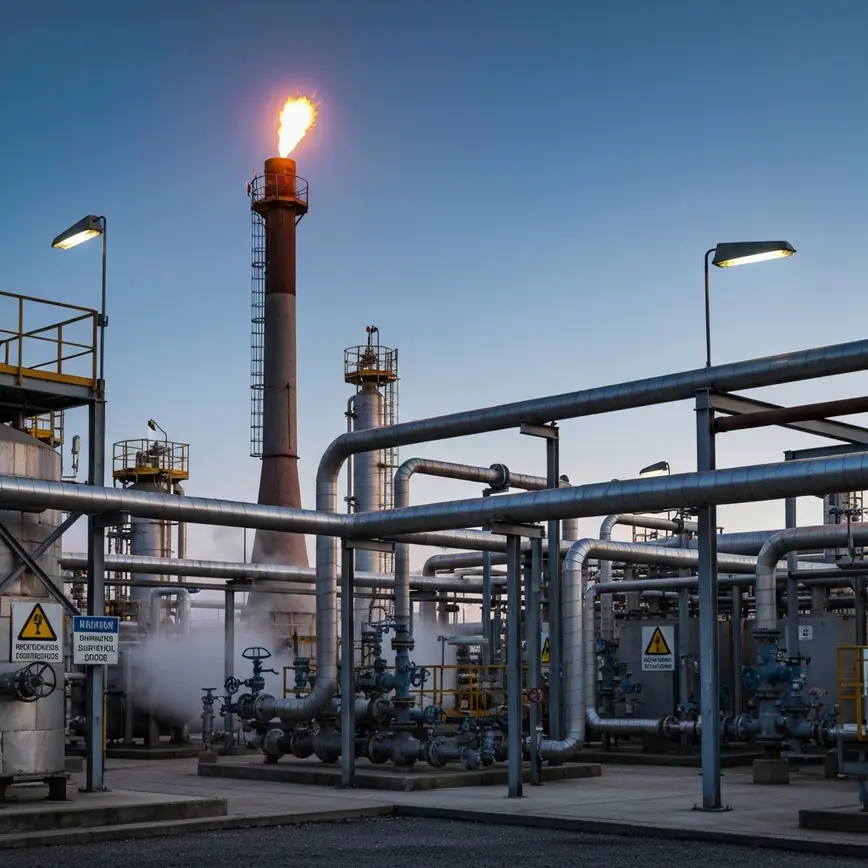
On the night of March 13, 2026, a chemical plant fire erupted at LyondellBasell’s Bayport Choate chemical plant located at 10801 Choate Road in Pasadena, Texas, near Houston. Reported at 9 p.m. Thursday, the incident was triggered by a “process upset” in a chemical process unit, which caused the unintended release of a flammable product. This flammable material ignited when it reached the pilot light of a nearby flaring operation, resulting in visible flames and thick smoke plumes observable from miles away.
The fire burned intensely for several hours until it was contained early Friday morning around 2-3 a.m. First responders, including the Harris County Fire Marshal’s Office and La Porte Office of Emergency Management, played a critical role by closing a key chemical release valve. Fortunately, there were no injuries, all personnel were accounted for and safe, no evacuations were required, and there were no off-site impacts. Harris County Pollution Control monitored air quality at seven stations, confirming normal levels throughout the event. The company promptly notified all appropriate agencies, highlighting the effectiveness of the multi-agency response.
Core safety lesson
The technical failure at the core of this chemical plant fire was a process upset that led to an uncontrolled release of flammable material, which then ignited via the flare system’s pilot light. This chain of events underscores vulnerabilities in process safety management and ignition source controls within high-hazard chemical operations.
The Hazard: Process upset leading to flammable release and ignition from flaring pilot light.
The Control: Implement advanced process safety management (PSM) systems with real-time monitoring, automated shutdown interlocks (e.g., high-pressure or level alarms), regular process hazard analyses (PHA) like HAZOP studies, flame arrestors, vapor recovery systems, auto-ignition source isolation on flare headers, flare system audits, on-site fire suppression like deluge systems and foam monitors, and robust emergency response plans with drills.
These controls are non-negotiable because chemical plant fires can escalate rapidly from a minor upset to catastrophic events, endangering lives, property, and the environment. Real-time PSM monitoring detects deviations before they result in releases, while automated interlocks prevent propagation—without them, as seen in this incident, a simple process upset becomes a hours-long blaze. PHA studies proactively identify “what-if” scenarios unique to your site, ensuring tailored mitigations that generic procedures cannot match. Similarly, flare system upgrades eliminate persistent ignition sources like pilot lights, which are proven ignition points in chemical plant fires. On-site suppression and drilled response plans buy critical time, turning potential disasters into contained events, as demonstrated by the quick valve closure here. Skipping these invites complacency, and in PSM-regulated industries, the cost of failure far exceeds implementation.
Investing in these layered defenses aligns with OSHA PSM standards and industry best practices, fostering a culture where every supervisor and operator owns process integrity. Regular audits and drills ensure controls remain effective, preventing the visibility and duration issues that amplified community concern in this chemical plant fire despite no off-site harm.
Supervisor’s discussion guide
Engage your crew with these questions to drive home the lessons from this chemical plant fire:
Q1: “Looking at our own equipment today, where is the biggest risk of a process upset leading to a flammable release?”
Q2: “How do our flare systems or ignition sources compare to the pilot light involved here—what audits have we done recently?”
Q3: “If a chemical plant fire started on our site right now, what’s our first suppression action and who coordinates with external responders?”
Q4: “What personal observations from the past week point to PSM weaknesses we need to address immediately?”
Action plan & inspection
- Inspect all process units for real-time monitoring systems and test automated shutdown interlocks (high-pressure/level alarms) for functionality.
- Audit flare headers and pilot lights: verify flame arrestors, vapor recovery, or isolation systems are installed and operational.
- Check on-site fire suppression infrastructure—deluge systems, foam monitors, water curtains—for pressure, coverage, and maintenance tags.
- Review latest PHA/HAZOP studies: confirm action items from upset scenarios are closed and schedule next analysis if overdue.
- Validate emergency response plans: confirm mutual aid contacts with local fire departments and schedule a chemical fire drill within 30 days.
Key takeaways
A chemical plant fire like the one at LyondellBasell’s Bayport Choate plant on March 13, 2026, reminds us that process upsets are predictable with proper PSM, and ignition sources like flare pilots are manageable through engineering controls. No injuries occurred due to swift response and robust monitoring, but hours of flames and smoke highlight the stakes—implement real-time systems, automated safeguards, and regular PHAs to stop releases at the source. Flare audits and suppression readiness turn potential catastrophes into footnotes.
Supervisors, lead by enforcing immediate inspections and crew discussions; this is how we prevent chemical plant fires in 2026. PSM isn’t paperwork—it’s the barrier between deviation and disaster. Commit to these controls today, drill relentlessly, and audit without exception to keep our sites safe.
Source & Disclaimer: This toolbox talk is for educational purposes based on public report. Read Original Report