Meeting details
Topic: Preventing Combustible Dust Explosion in Lumber Mill Operations
Goal: This toolbox talk on combustible dust explosion will review the fatal Robbins Lumber incident and prevent similar accidents in 2026.
The incident: what happened?
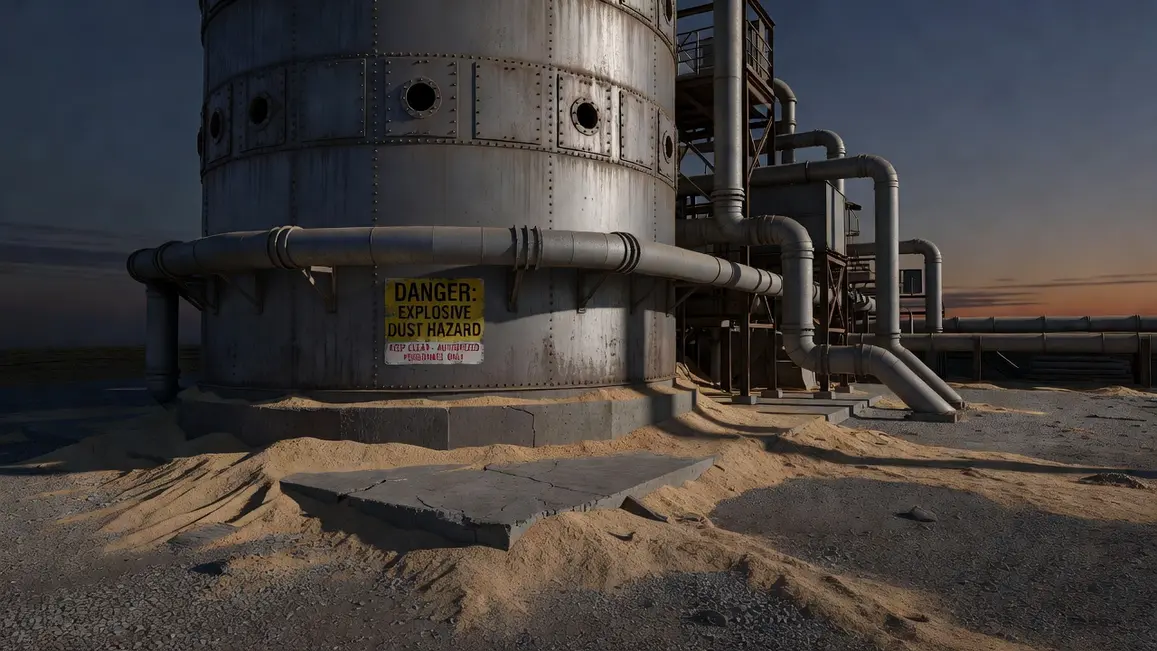
On May 15, 2026, a fire originated at the base of a silo containing particulate material at Robbins Lumber in Searsmont, Maine. Rapid ignition of the accumulated sawdust triggered a violent combustible dust explosion that lifted the silo from its concrete foundation, released large volumes of combustible material into the surrounding area, and caused the structure to topple while engulfing the site in flames. The Maine State Fire Marshal’s Office classified the fire as accidental, with the investigation remaining ongoing at the time of reporting.
The explosion resulted in three fatalities: Searsmont Assistant Fire Chief Wayne Woodbury, age 76, firefighter Andrew Cross, age 27, and mill co-owner Alden J. Robbins, who succumbed to his injuries on July 2, 2026. Ten additional people were injured, including Robbins’ daughter Lily. The incident highlights the extreme destructive potential when combustible dust is allowed to accumulate without adequate controls in industrial storage structures.
Core safety lesson
The Hazard: Combustible dust explosion
The Control: Implement a comprehensive housekeeping and dust-control program that includes regular removal of accumulated sawdust, use of explosion-proof vacuums or wet collection methods, and installation of properly designed dust-collection systems with explosion venting or suppression.
This control is non-negotiable because even small quantities of fine sawdust can create an explosive atmosphere when suspended in air and exposed to an ignition source. In the Robbins Lumber case, ignition at the silo base allowed the dust to propagate rapidly, generating pressures that exceeded the structure’s capacity and produced a secondary release of material that intensified the fire. Without systematic removal and engineered venting, any industrial site handling organic particulates faces the same chain of events.
Furthermore, rural facilities often lack immediate access to specialized suppression resources, making proactive dust management the primary defense. Regular housekeeping eliminates the fuel load before it can participate in a deflagration, while properly designed collection systems with venting direct explosive forces away from occupied areas and critical equipment. These measures directly address the root conditions that turned a localized fire into a catastrophic structural failure.
Supervisor’s discussion guide
Q1: “Looking at our own equipment today, where is the biggest risk of combustible dust accumulation?”
Q2: “What ignition sources near our bulk storage areas could initiate a similar event?”
Q3: “How often are we verifying that dust-collection systems and explosion vents remain unobstructed and functional?”
Q4: “If a fire started at the base of one of our silos, what immediate actions would our pre-incident plan require?”
Action plan & inspection
- Inspect all silos and dust-collection equipment for visible accumulations of sawdust exceeding 1/32 inch on horizontal surfaces.
- Verify that explosion-relief panels and deflagration vents are free of obstructions and directed to safe exterior locations.
- Confirm that housekeeping schedules include daily removal of particulate from silo bases and transfer points using approved wet or vacuum methods.
- Review and update site-specific pre-incident plans with the local fire department, including water supply and foam capability for Class A fires.
- Document any deficiencies found and assign immediate corrective actions with responsible persons and deadlines.
Key takeaways
Combustible dust explosion events progress rapidly from localized ignition to structural failure when fuel, suspension, and confinement are present. The Robbins Lumber incident demonstrates that consistent housekeeping combined with engineered venting and suppression systems can interrupt this progression before it endangers personnel or first responders.
Supervisors must treat dust control as a continuous operational requirement rather than a periodic task. Immediate verification of housekeeping effectiveness and emergency planning after this meeting will reduce the likelihood of a comparable tragedy occurring at our facility.
Source & Disclaimer: This toolbox talk is for educational purposes based on public report. Read Original Report