Meeting details
Topic: Construction site security during school holidays
Goal: This toolbox talk on construction site security will review general risks highlighted by HSE guidance and prevent similar accidents in 2026.
The incident: what happened?
HSE guidance on construction site security highlights recurring dangers when sites are left accessible during school holidays. Past tragic incidents referenced in the advisory involved children entering unsecured construction areas, resulting in fatalities and serious injuries. No specific location, date, sequence of events, or investigating authority is provided in the advisory, which instead focuses on policy recommendations to address these ongoing vulnerabilities.
The advisory stresses that inadequate perimeter controls allow unauthorised access, exposing children to open excavations, unstable stored materials, and operable plant. Without robust construction site security measures, these conditions have repeatedly led to preventable harm. The emphasis remains on proactive strengthening of site boundaries and access controls rather than reaction after an event.
Core safety lesson
The Hazard: Unsecured or inadequate perimeter fencing/hoarding, open excavations, and improperly stored materials or plant.
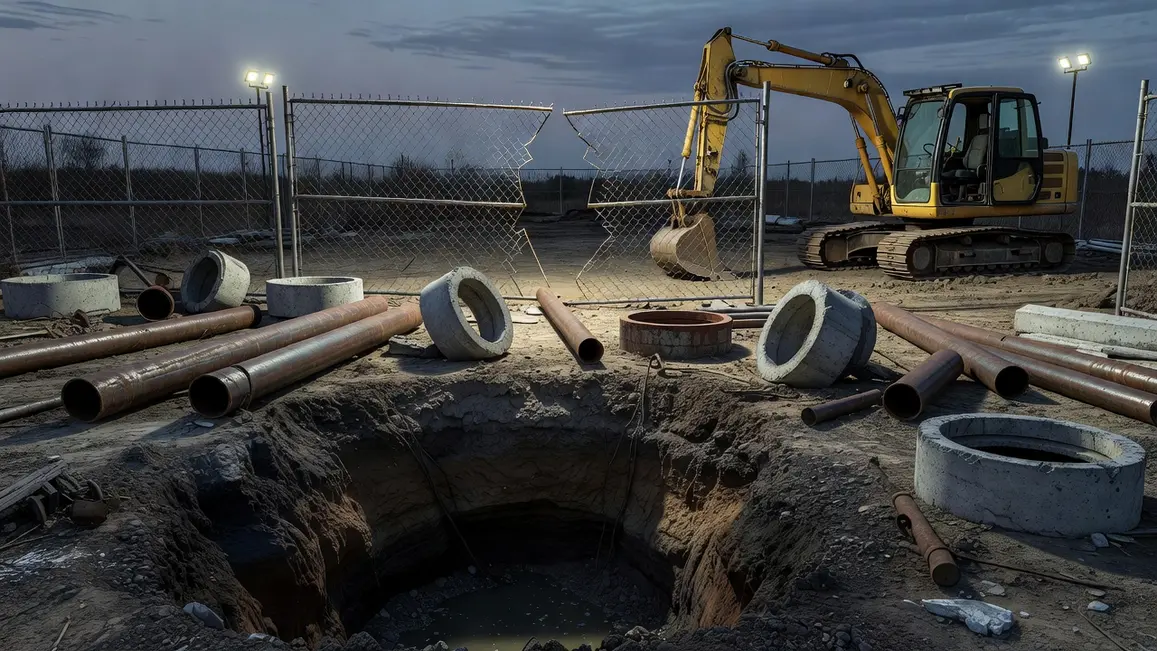
The Control: Install and maintain robust, site-specific fencing or hoarding that is inspected regularly; barrier off or securely cover all excavations and remove ladders at the end of each shift; store materials so they cannot roll or collapse and immobilise plant inside a locked compound.
These controls are non-negotiable because children are naturally curious and may view a construction site as an adventure area during holidays when supervision is reduced. A single gap in fencing or an uncovered trench can turn a routine site into a fatal attraction within minutes. Regular inspection ensures that weather, vandalism, or daily operations do not silently degrade the barriers that protect the public.
Construction site security must also address materials and plant because loose pipes, manhole rings, or unlocked vehicles can be moved or started by unauthorised persons, creating crushing or impact hazards. Locking plant and securing stockpiles removes the opportunity for misuse and demonstrates due diligence that regulators expect from every contractor.
Supervisor’s discussion guide
Q1: “Looking at our own equipment today, where is the biggest risk of open excavations or trenches remaining accessible?”
Q2: “How do our current perimeter checks compare with the HSE recommendations on construction site security?”
Q3: “What stored materials on this site could roll or topple if disturbed, and how are they secured at shift end?”
Q4: “Which plant items need additional immobilisation measures before we leave tonight?”
Action plan & inspection
- Walk the entire perimeter and confirm all fencing and hoarding panels are intact and properly joined.
- Verify every excavation is either covered with secured boards or surrounded by continuous barriers.
- Remove all ladders from scaffolds and trenches and store them in a locked container.
- Check that pipes, manhole rings, and cement bags are stacked or chocked so they cannot move.
- Confirm all plant and vehicles are immobilised and, where possible, locked inside the compound.
Key takeaways
Construction site security is not a one-time installation but a daily discipline of inspection and correction. When sites are left unattended, especially during school holidays, the absence of robust controls can quickly convert normal site conditions into life-threatening hazards for children.
By consistently applying the controls outlined in the HSE advisory—strong fencing, covered excavations, secured materials, and immobilised plant—supervisors fulfil their duty to protect both workers and the public. These actions directly reduce the likelihood of unauthorised entry and the serious incidents that have occurred on inadequately secured sites in previous years.
Source & Disclaimer: This toolbox talk is for educational purposes based on public report. Read Original Report