Meeting details
Date: May 11, 2026
Topic: Plastics Plant Fire Prevention
Goal: This toolbox talk on plastics plant fire prevention will review the plastics manufacturing facility fire in Henry, Tennessee, and prevent similar accidents in 2026.
The incident: what happened?
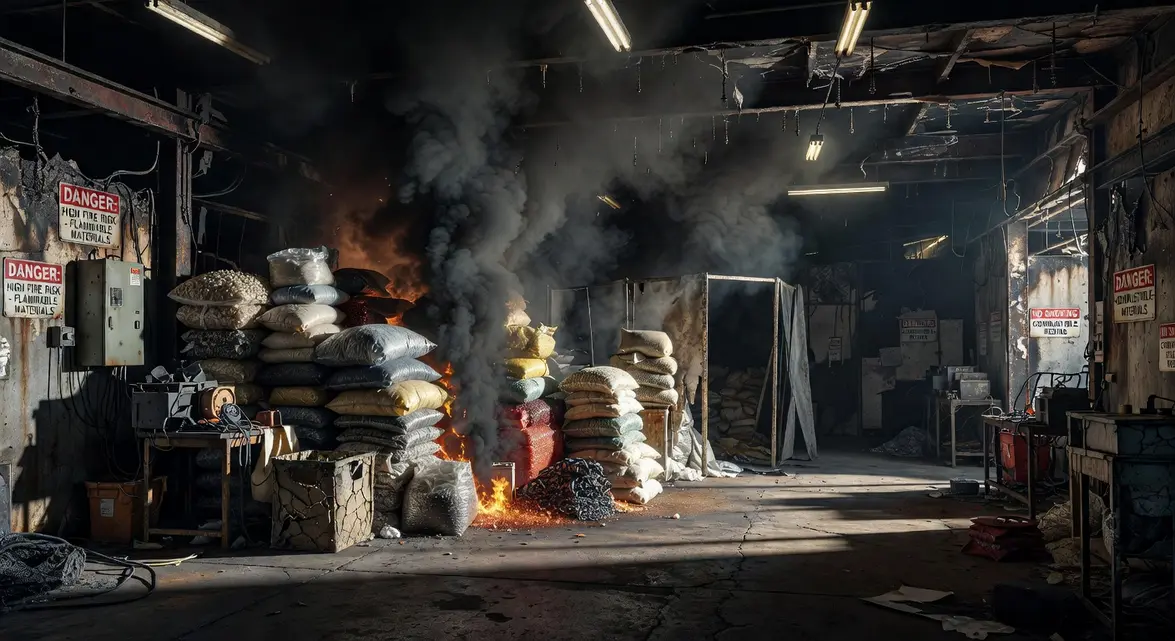
A massive fire erupted at a plastics manufacturing facility in Henry, Tennessee, on a Friday, producing billowing black smoke that highlighted critical failures in plastics plant fire prevention. The blaze, fueled by combustible polymers and resins common in plastics processing, spread rapidly and completely destroyed three buildings at the plant. This incident underscores the high risks in such environments where flammable materials can ignite and overwhelm standard defenses.
The fire’s intensity led to total structural loss, with no specific injuries detailed in reports, but the scale of destruction—three entire buildings reduced to rubble—demonstrates how quickly fires can escalate without proper containment. Listed under real safety incidents by ISSSource, this event serves as a stark reminder of the need for robust plastics plant fire prevention measures to protect lives, property, and surrounding communities.
Core safety lesson
The technical failure in this incident stemmed from inadequate fire suppression, containment, and smoke management in a high-risk plastics processing environment. Plastics facilities handle highly combustible materials prone to rapid fire spread and toxic smoke generation, as evidenced by the black plume and total loss of three buildings.
The Hazard: Flammable materials ignition, inadequate fire containment, and toxic smoke plume from burning plastics.
The Control: Install automatic fire suppression systems (e.g., sprinklers or clean-agent systems per NFPA 13), fire-rated barriers (2-hour rated per IBC), and smoke control ventilation (NFPA 92), with regular inspections and EPA-compliant risk assessments.
These controls are non-negotiable because plastics burn hotter and faster than many materials, producing dense, hazardous smoke that can spread offsite and endanger communities. Without automatic suppression, even small ignitions escalate, as seen in Henry, Tennessee. Fire-rated barriers prevent spread between areas, buying critical evacuation time, while smoke systems mitigate toxic exposure—essential for compliance and survival. Skipping these invites catastrophe, regulatory fines, and shutdowns; proactive plastics plant fire prevention saves lives and assets.
Supervisor’s discussion guide
Engage your crew with these questions to drive home the plastics plant fire prevention lessons:
Q1: “Looking at our own equipment today, where is the biggest risk of flammable materials ignition?”
Q2: “How would a fire spread in our facility without proper fire-rated barriers, and what signs of inadequate containment have you noticed?”
Q3: “What toxic hazards could black smoke from plastics create here, and how do our smoke control systems address them?”
Q4: “In our plastics plant fire prevention checks, which suppression system needs immediate attention?”
Action plan & inspection
Conduct these 5 immediate checks post-meeting and document findings:
- Inspect all automatic fire suppression systems (sprinklers/clean-agent) for NFPA 13 compliance and test activation.
- Verify fire-rated barriers between process areas/buildings meet 2-hour IBC standards via third-party inspection records.
- Test smoke/heat detectors and exhaust ventilation systems per NFPA 92 for proper function.
- Review hazardous materials risk assessments and confirm EPA RMP community notification protocols are current.
- Examine storage of flammable polymers/resins for proper spacing and ignition source isolation.
Key takeaways
Plastics plant fire prevention demands unwavering commitment to engineered controls like suppression systems, fire barriers, and smoke management—failures here, as in Henry, Tennessee, lead to total destruction. Supervisors must lead by enforcing daily inspections and crew awareness to eliminate ignition risks from combustible materials.
By integrating these measures, we protect our sites, teams, and communities from rapid fire spread and toxic plumes. Make plastics plant fire prevention your non-negotiable priority: inspect today, prevent tomorrow.
Source & Disclaimer: This toolbox talk is for educational purposes based on public report. Read Original Report