Meeting details
Topic: Confined Space Sewage Gas Hazards and Controls
Goal: This toolbox talk on confined space sewage gas will review the fatal incident involving Construction Labor Services Inc. in Mobile, Alabama, on August 11, 2025, and equip supervisors and crews with prevention strategies to avoid similar tragedies in 2026.
The incident: what happened?
On August 11, 2025, three workers from Construction Labor Services Inc. were installing and repairing sewer lines inside a manhole in Mobile, Alabama, when they were suddenly overcome by confined space sewage gas. The toxic sewage gases that had accumulated in the enclosed space led to two workers becoming unresponsive and ultimately fatalities, while the third worker managed a self-rescue. This tragic event highlighted the deadly risks of entering manholes without proper safeguards against confined space sewage gas buildup.
An OSHA investigation pinpointed multiple failures: the employer lacked a confined space entry program, procedures, training, and emergency response plans, including assessments of acceptable entry conditions. As a result, the U.S. Department of Labor’s OSHA cited the company with 16 serious violations and proposed penalties totaling $257,707. The absence of atmospheric testing, rescue protocols, and worker preparation turned a routine sewer repair into a preventable double fatality.
Core safety lesson
The core technical failure in this incident was the complete absence of a confined space entry program, allowing confined space sewage gas to overwhelm workers without warning. OSHA standard 1910.146 mandates a permit-required confined space system to identify and control such hazards.
The Hazard: Confined space sewage gas, including toxic and flammable vapors from sewage, which can displace oxygen, cause rapid unconsciousness, and lead to asphyxiation or explosion in manholes and similar enclosures.
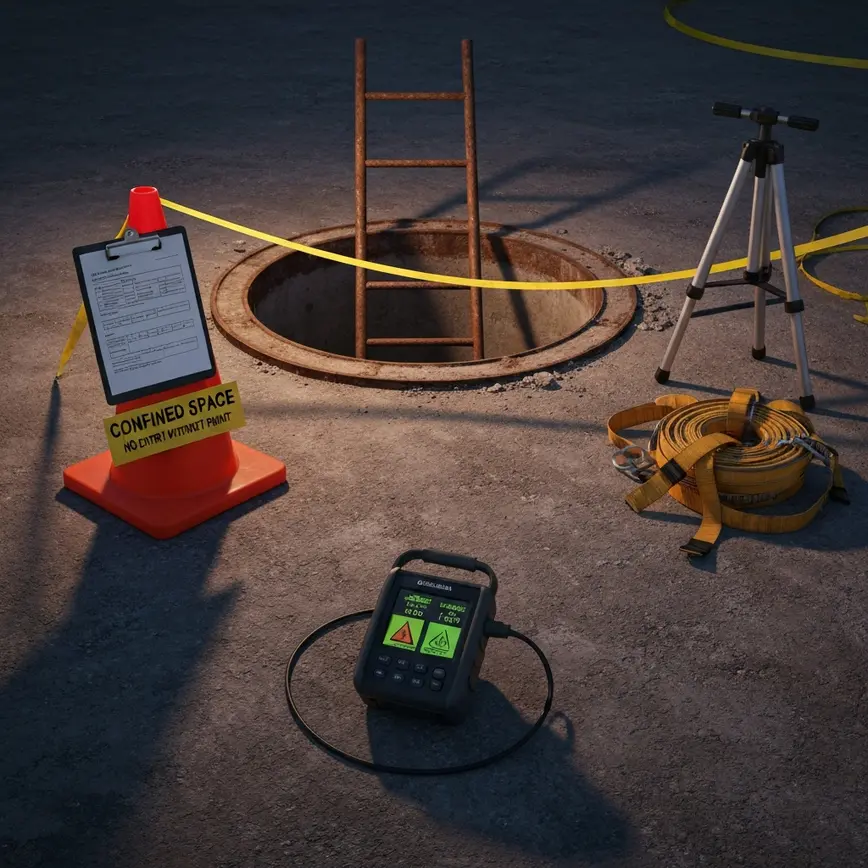
The Control: Implement a comprehensive confined space entry permit system, including pre-entry atmospheric testing with calibrated gas monitors for oxygen deficiency, flammable vapors, and toxics; a written program outlining hazards, entry procedures, and roles for entrants, attendants, and rescuers; mandatory training on recognition, PPE like respirators, and self-rescue; plus non-entry rescue plans with retrieval lines and drills coordinated with emergency services.
This control is non-negotiable because confined space sewage gas is invisible, odorless in high concentrations, and can accumulate unpredictably due to decomposition or poor ventilation. Without testing and permits, workers enter blind to lethal conditions— as seen in Mobile, where two lives were lost. Training ensures recognition and response, while rescue plans prevent secondary tragedies during collapses. Regular audits and drills make compliance instinctive, directly saving lives and avoiding massive penalties like the $257,707 fines imposed.
Supervisor’s discussion guide
Engage your crew with these questions to drive home the lessons:
Q1: “Looking at our own equipment today, where is the biggest risk of confined space sewage gas buildup?”
Q2: “What steps would you take before entering a manhole, and why is atmospheric testing non-negotiable?”
Q3: “How would you respond if a coworker shows signs of exposure to confined space sewage gas?”
Q4: “Recall a time we’ve practiced rescue drills— what gaps do we need to fix for non-entry retrieval?”
Action plan & inspection
- Verify all gas monitors are calibrated and functional; test one now and log results.
- Locate and review the site’s written confined space entry program; ensure it’s posted and up-to-date.
- Inspect retrieval lines, harnesses, and non-entry rescue gear for damage or expiration.
- Check training records for all crew members on confined space hazards and procedures; schedule refreshers if over 12 months old.
- Identify all permit-required confined spaces on site (e.g., manholes) and post warning signs with entry prohibitions until permits are issued.
Key takeaways
Confined space sewage gas remains a silent killer in manholes and sewers, as proven by the Mobile, Alabama incident where two workers died due to untested atmospheres and absent programs. Supervisors must enforce permit systems, atmospheric testing, training, and rescue plans every time— no shortcuts. These controls, per OSHA 1910.146, directly address the 16 violations cited and prevent the $257,707 penalties that follow negligence.
Commit today: zero tolerance for unpermitted entries, annual training refreshers, and drill-tested rescues. By prioritizing these, we honor the lessons from August 11, 2025, and ensure every crew member returns home safe in 2026 and beyond.
Source & Disclaimer: This toolbox talk is for educational purposes based on public report. Read Original Report