Meeting details
Topic: Combustible Dust Hazards and Multi-Violation Lessons from Horizon Biofuels Explosion
Goal: This toolbox talk on combustible dust hazards will review the Horizon Biofuels explosion in Fremont, Nebraska, in July 2025 and prevent similar accidents in 2026.
The incident: what happened?
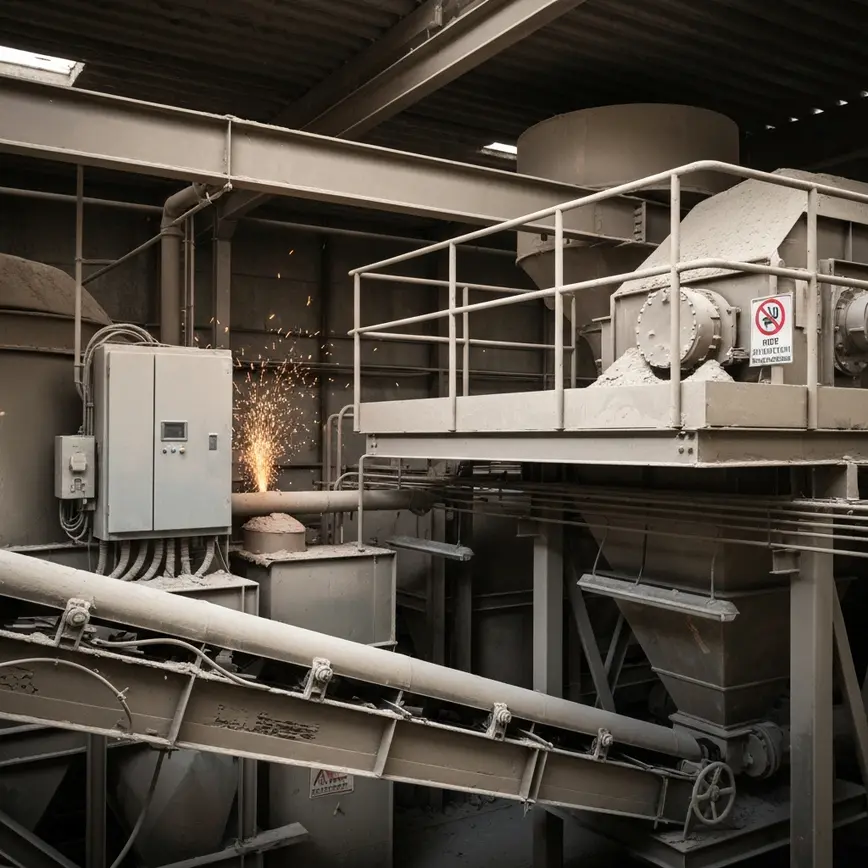
In July 2025, a deadly explosion rocked the Horizon Biofuels Inc. facility in Fremont, Nebraska, highlighting severe combustible dust hazards that had gone unchecked. Fine dust particles from biofuel processing had accumulated throughout the plant, creating an explosive atmosphere when ignited. The blast resulted in fatal injuries to at least one worker, underscoring the catastrophic potential of ignoring such risks in industrial settings.
OSHA launched an investigation on July 29, 2025, and on February 10, 2026—the same day as this toolbox talk—issued citations for willful and serious safety violations. These included combustible dust buildup, failure to protect equipment from ignition sources like sparks or hot surfaces, and lack of fall protection for work at heights over four feet. The U.S. Department of Labor proposed penalties totaling $147,542, giving the company 15 business days to comply, contest the citations, or request an informal conference. This incident serves as a stark reminder of how multiple lapses can compound into tragedy.
Core safety lesson
The Horizon Biofuels explosion exemplifies how combustible dust hazards, combined with ignition sources and fall risks, can lead to preventable fatalities. The primary technical failures were unchecked dust accumulation, unguarded equipment prone to sparks, and absent fall protection systems, all in violation of OSHA standards.
The Hazard: Combustible dust hazards arise when fine, combustible particles like those from biofuels suspend in air and mix with an ignition source, causing explosions. Additional hazards included unprotected ignition sources near flammable materials and fall exposures over four feet during operations.
The Control: For combustible dust hazards, enforce regular housekeeping with vacuuming or compressed air (OSHA 1910.22) and install dust collection systems with ventilation to keep concentrations below explosive limits. Protect against ignition via hazard assessments, intrinsically safe equipment, grounding/bonding, and explosion-proof classifications (OSHA 1910.307) with inspections. For falls, use guardrails, safety nets, or personal fall arrest systems on surfaces over four feet (OSHA 1910.28), plus training.
These controls are non-negotiable because combustible dust hazards can propagate explosions across facilities, as seen at Horizon, where buildup fueled a chain reaction. Without rigorous housekeeping and engineering controls, even minor sparks become lethal. Fall protection is equally critical in chaotic post-explosion environments or routine elevated work, preventing secondary injuries. Compliance isn’t optional—it’s a legal and ethical imperative to protect lives, avoid massive fines like $147,542, and maintain operational continuity.
Supervisor’s discussion guide
Engage your crew with these questions to drive home the lessons:
Q1: “Looking at our own equipment today, where is the biggest risk of combustible dust hazards?”
Q2: “What ignition sources do we have near dust-prone areas, and how can we isolate them?”
Q3: “Have you spotted any walking/working surfaces over four feet without proper fall protection?”
Q4: “How often should we conduct housekeeping to prevent dust buildup like at Horizon Biofuels?”
Action plan & inspection
Immediately after this meeting, conduct these 5 checks and document findings:
- Inspect all processing areas for combustible dust buildup; vacuum or use compressed air to clean per OSHA 1910.22.
- Assess equipment for ignition sources—verify grounding, bonding, and explosion-proof ratings (OSHA 1910.307).
- Review walking/working surfaces over four feet; install or confirm guardrails, nets, or arrest systems (OSHA 1910.28).
- Test dust collection and ventilation systems to ensure concentrations stay below explosive limits.
- Schedule and log worker training refreshers on combustible dust hazards, ignition controls, and fall protection.
Key takeaways
The Horizon Biofuels explosion on July 2025, cited by OSHA on February 10, 2026, for willful violations including combustible dust hazards, proves that neglecting housekeeping, ignition controls, and fall protection invites disaster. Fines of $147,542 pale against the loss of life—implement dust collection, safe equipment, and barriers now to eliminate these risks.
Make combating combustible dust hazards a daily priority: inspect relentlessly, train thoroughly, and act decisively. This toolbox talk equips you to lead safer sites in 2026 and beyond, turning lessons from tragedy into unbreakable habits.
Source & Disclaimer: This toolbox talk is for educational purposes based on public report. Read Original Report