Posted inSafety Toolbox Talk
Safety Toolbox Talk: Ministry of Labor Forms 'Coupang TF' to Investigate Industrial Accident Concealment and …
meeting details
Topic: Accountability in Accident Reporting and High-Intensity Logistics Safety Management
Goal: To review the Ministry of Employment and Labor’s investigation into accident concealment and to reinforce our site’s commitment to transparent reporting and worker health protection.
the incident: what happened?
Listen up everyone. We are reviewing a serious report regarding the Ministry of Employment and Labor (MOEL) launching a specialized “Coupang Task Force” on January 6, 2026. This is not a standard audit; it is a 32-member team consisting of 17 labor specialists and 15 industrial safety specialists, led directly by Vice Minister Kwon Changjun. This regulatory action was triggered by allegations of systemic industrial accident concealment, specifically following the death of Jeong Seulgi on May 28. The investigation suggests that there were organizational efforts to dissuade the grieving family from filing for industrial accident compensation, effectively hiding the true human cost of high-pressure logistics operations.
The scope of this inspection is massive, targeting three major logistics centers and four delivery camps where fatalities have occurred. The Ministry is focusing on the lethal combination of intensive nighttime work and the lack of health protection measures. This case highlights a critical management failure: when a company suppresses accident reporting, it prevents the identification of root causes, leaving every single worker vulnerable to recurring hazards. The Ministry has made it clear that organizational concealment of accidents will now be treated as a serious criminal act without leniency. We are here today to ensure that our site never falls into the trap of prioritizing speed over the lives of our crew.
core safety lesson
The technical failure here isn’t just a broken machine; it’s a broken reporting culture. The primary hazard identified is Cardiovascular Strain and Fatigue exacerbated by Organizational Concealment. In high-volume fulfillment environments, the physiological stress of circadian rhythm disruption during nighttime shifts is a silent killer. When management fails to acknowledge these health impacts or actively suppresses injury reports, they are bypassing the most critical safety control we have: the feedback loop. Without honest data, we cannot implement the necessary medical screenings or mandatory rest intervals required to prevent heart failure or exhaustion-related accidents.
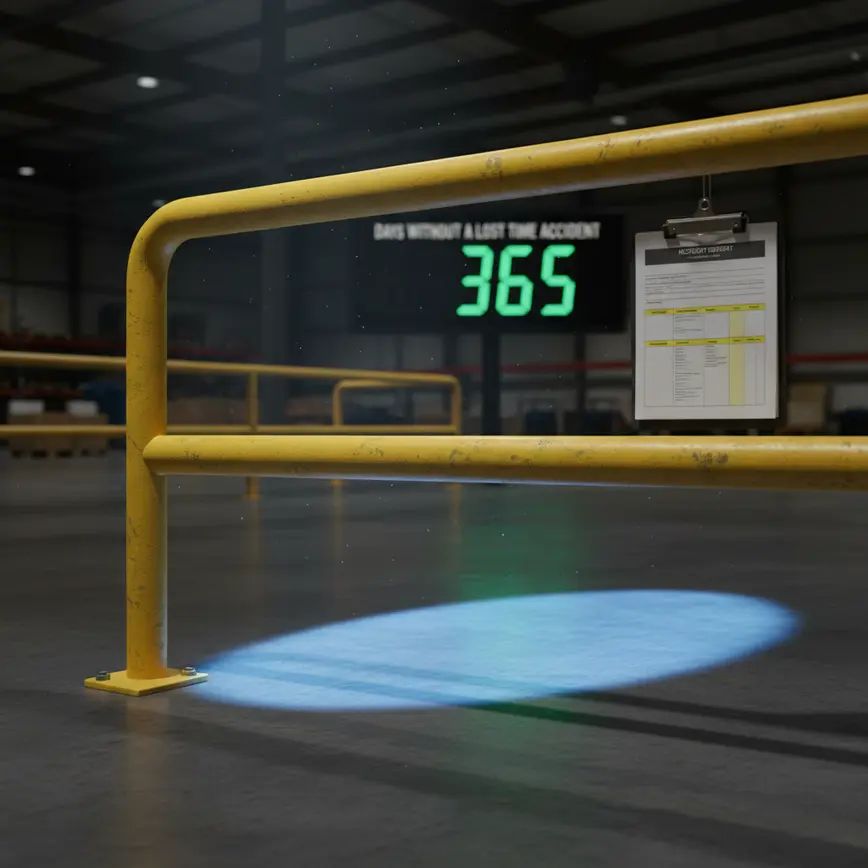
The secondary hazard involves Ergonomic Strain and Struck-by Injuries. In the rush to meet delivery quotas, workers often bypass mechanical aids or ignore pedestrian-vehicle segregation. The control for this is non-negotiable: we must maintain strict physical barriers between forklift paths and walkways, and we must utilize proximity sensors. More importantly, the “Control” for concealment is Transparency. Every minor strain, every “near-miss” with a vehicle, and every instance of extreme fatigue must be logged. If we don’t see the problem on paper, we can’t fix the problem on the floor. Safety is a data-driven discipline; if the data is falsified, the safety system fails.
supervisor’s discussion guide
Q1: Looking at our own nighttime operations, where do you feel the pressure to move faster leads to skipping safety protocols?
Q2: If a coworker is showing signs of extreme fatigue or chest pain, do you know the immediate steps to take, and do you feel comfortable stopping the line?
Q3: Are there any areas in the warehouse where pedestrian walkways are frequently ignored or blocked by freight?
Q4: What is the biggest barrier you face in reporting a “minor” injury or a near-miss to management?
action plan & inspection
- Health Monitoring Audit: Verify that all night-shift personnel have undergone cardiovascular screenings within the required timeframe.
- Physical Barrier Check: Inspect all pedestrian walkways and ensure physical barriers are intact and not bypassed by temporary storage.
- Vehicle Safety Systems: Test the “blue light” warning systems and proximity sensors on all forklifts and mobile equipment.
- Ergonomic Station Review: Conduct a spot-check of high-volume sorting areas to ensure mechanical lifting aids are functional and being utilized.
- Reporting Kiosk Verification: Ensure that accident reporting forms and digital kiosks are accessible to all staff and that the “No Retaliation” policy is clearly posted.
Source: Read Original Report