In any manufacturing plant, chemicals support daily production, from cleaners and solvents to raw materials.
They are vital to output, yet they also introduce risk. Which means careful control must be part of routine operations rather than a once-a-year exercise.
SDS management in manufacturing is the foundation of a safe, productive, and responsible operation.
This article will give you a clear path to build and maintain a strong chemical safety program that fits actual plant conditions.
What is SDS Management
A Safety Data Sheet is a standard 16-section document that lists key facts for a hazardous chemical, including properties, hazards, and protective steps that workers can apply quickly.
The format is consistent across products, which makes it easier to train and easier to find the right information in a hurry.
SDS management is the planned process of obtaining, maintaining, and providing open access to an SDS. This is ensured for every hazardous chemical on site, so the worker’s right-to-know becomes daily practice.
3 Core Benefits of Effective SDS Management
Risks from poor chemical handling are serious, both for people and for operations.
The International Labour Organization (ILO) estimates that one million workers die annually from exposure to hazardous substances.
A strong SDS program reduces risk and drives three core goals that guide everyday decisions.
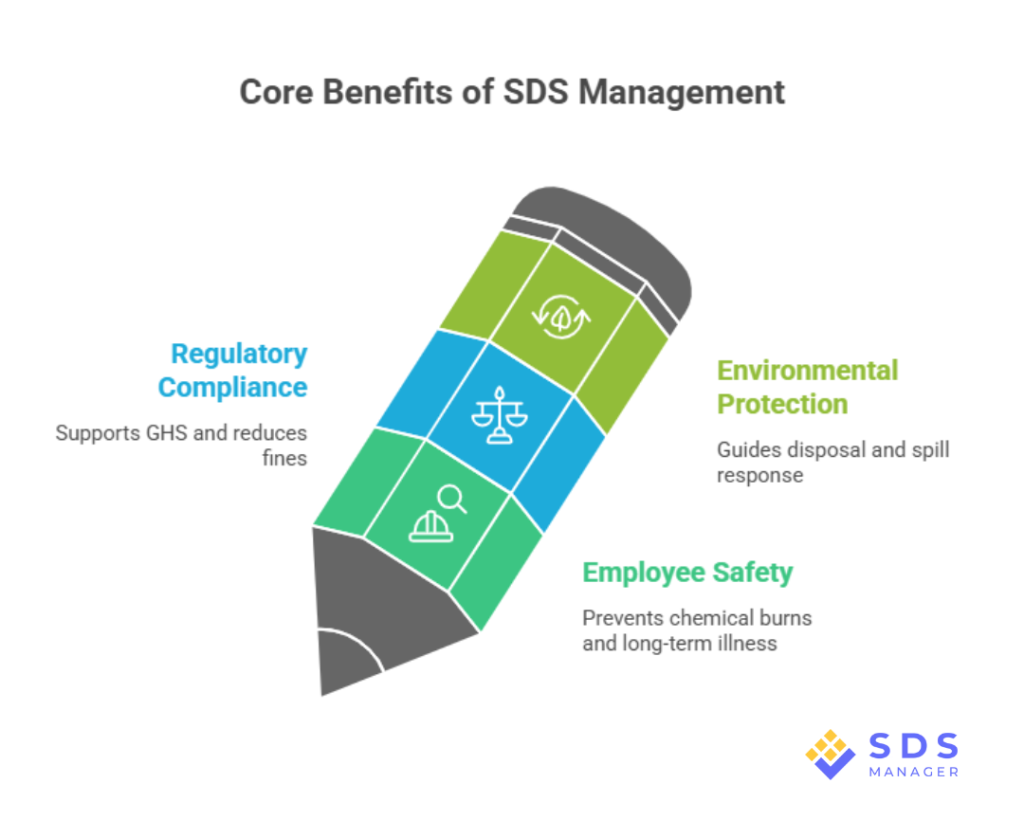
- Employee Safety: It helps prevent chemical burns, fires, and long-term illness by turning hazard and PPE guidance into clear actions.
- Regulatory Compliance: It supports the Globally Harmonized System, often called GHS, and reduces the chance of fines or shutdowns.
- Environmental Protection: It guides correct disposal and spill response, which protects the environment and your reputation.
Core Components of Building a Hazard Communication Program
Your SDS management system exists within a broader chemical hazard communication program.
A strong system is built on several interconnected pillars, from master inventory to ensuring every employee has access to it.
Component 1: The Chemical Inventory
You cannot manage what you do not track. So start with a site walk and list every chemical product across production, maintenance, and storage.
For each item, record the product name, the manufacturer, and the storage location.
Finally, make sure all your Safety Data Sheets are up-to-date. If you find any SDS that are missing or old, get the new version as soon as possible.
Component 2: GHS Compliant Labeling
Label all original and secondary containers with the product identifier like GHS pictograms, hazard statements, and signal words.
This information must remain readable under normal conditions of use.
Component 3: Obtaining and Maintaining SDS Library
An SDS library is a constantly changing set of files that changes as your inventory and suppliers change. Make sure the SDS is present for any new chemical before it enters use.
To ensure compliance with the latest hazard data, assign a dedicated person to check for updated SDSs every one to three years and to log all changes for auditing purposes.
Component 4: Making SDSs Accessible
Access cannot wait, because no one should search for a vital SDS during an emergency or a time-sensitive task.
A digital system is often the most reliable choice for busy sites, as long as it fits your budget and remains easy for workers to use across shifts.
Why a Digital SDS System is the Smarter Choice for Manufacturing?
Physical binders feel simple and familiar. But they are hard to keep current, slow to search in an emergency, and difficult to manage for large inventories or multi-building sites. They also create extra administrative work.
Modern digital SDS Management tools address these problems by centralizing control and making search fast. This helps teams find what they need in seconds from any computer or mobile device.
Leading providers like “SDS Manager” also automate SDS updates when manufacturers publish new revisions.
This lets you build accurate inventory lists in a few clicks and spend more time on risk control.
Importance of SDS Training in Manufacturing
Effective training is very important to turn SDS information into actions. It is the most important part of your SDS management program because it helps change how employees work every day.
To ensure training works, manufacturers should:
- Set clear goals for skills and safe behaviors.
- Train employees before they are exposed to chemical hazards.
- Provide regular, hands-on refresher training using real-world tasks.
What Your SDS Training Must Cover
At least, your training needs to include the following points:
- Locations where hazardous chemicals are present.
- How to find and use the SDS library, especially a digital system.
- How to read and apply information on labels and SDSs.
- The physical and health hazards of chemicals in the work area.
- How to protect themselves, including PPE.
- What to do in a spill or exposure emergency.
Best Practices for Effective Training
- Make it Relevant. Use examples drawn from the chemicals and tasks people handle each day.
- Be Interactive. Add demos, short quizzes, and toolbox talks to keep attention high.
- Train at the Right Time. Train before an employee handles any hazardous chemical, and again when a new hazard appears.
- Document Everything. Track who was trained, when it happened, and the topics covered, then keep sign-in sheets and quiz results.
How to Build a Strong Culture of Chemical Safety for Manufacturing
Forms and software are tools, but the goal is a lasting safety culture where people feel responsible for their choices.
Go beyond avoiding fines and build a place where safety is part of everyday operations.
This culture rests on three habits that safety managers can model and reinforce every week until they become normal.
- Visible Leadership Commitment: When leaders handle chemicals safely, staff notice and follow.
- Employee Empowerment: Invite questions and near-miss reports without blame, then explain the actions taken.
- Continuous Improvement: Review incidents, audit the process, and use feedback to update training and controls.
Finally
SDS management in manufacturing is an ongoing process that starts with a complete SDS inventory.
It protects people, meets regulatory requirements, and strengthens operations by reducing downtime and uncertainty that can affect production.
So, begin with a quick audit of your SDS process, list the top three gaps to fix first, and assign owners with due dates.
So momentum builds and the improvements hold.
FAQs
1. How often do I need to update my SDSs?
Keep the most current version from the manufacturer and review the library every one to three years.
2. What is the difference between an MSDS and an SDS?
MSDS means Material Safety Data Sheet and reflects an older format, while SDS means Safety Data Sheet and follows the newer 16-section GHS format.
3. Are digital copies of SDSs compliant?
Yes, electronic access is compliant if the system is reliable, workers are trained to use it, and a simple backup exists for outages.
4. How do I handle SDSs for chemicals in small, portable containers?
Label secondary containers with the product identifier and hazard information, keep the original SDS easy to access near the point of use.
5. What are the most common mistakes to avoid in SDS management?
Common issues include incomplete inventories, missing or outdated SDSs, poor access on all shifts, and weak training.