meeting details
Topic: Agricultural Machinery Safety: Preventing Tractor Rollaways
Goal: This toolbox talk on preventing tractor rollaways will review the recent fatal incident involving a baling operation and reinforce critical procedures to prevent similar accidents.
the incident: what happened?
We are opening this safety briefing by addressing the tragic workplace fatality confirmed by WorkSafe Victoria as the first of 2026. The incident occurred during a routine hay baling operation. A 69-year-old tractor operator encountered a hay jam in the attached baler trailer. In a moment of urgency, the operator exited the cab to manually clear the blockage. This action, taken without fully securing the vehicle, led directly to the failure of preventing tractor rollaways.
The investigation confirms that shortly after the 69-year-old operator exited the cab, the tractor rolled forward, striking and fatally injuring the individual. This devastating outcome underscores the extreme danger posed when heavy agricultural equipment is not completely neutralized before maintenance or clearing operations begin. The primary root cause was the uncontrolled movement of the heavy vehicle, which occurred when the operator positioned himself in the path of potential movement between the tractor and the implement.
core safety lesson
The Hazard: Uncontrolled Vehicle Movement (Roll-forward) and Entanglement/Crushing.
The Control: Full Isolation and Securement Procedures (The "Three-Point Stop" and LOTO).
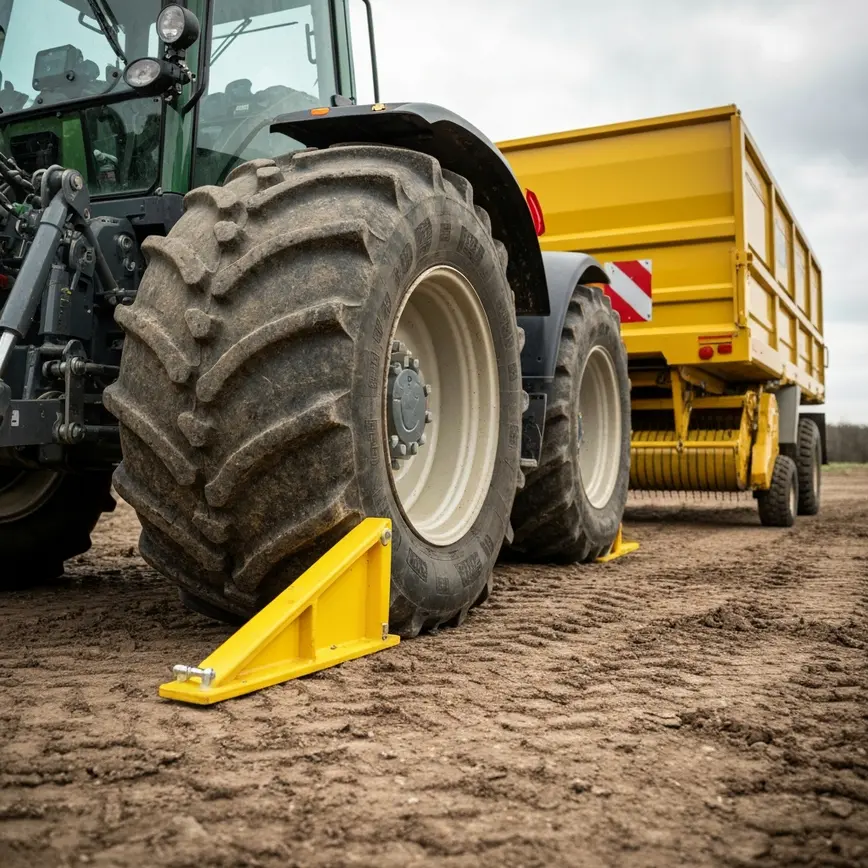
The core lesson here is absolute adherence to securing equipment before leaving the operator’s station. This means implementing the "Three-Point Stop" every single time you exit the cab, even for a moment: 1. Engage the parking brake firmly. 2. Place the transmission in park (or the lowest gear if manual). 3. Turn the engine completely OFF and remove the key. If you are on any slope or uneven ground, wheel chocks are mandatory. There is no exception to this rule when you are exiting the cab, especially when working near the potential path of movement.
Furthermore, clearing a jam is maintenance, and maintenance requires a strict Lockout/Tagout (LOTO) procedure. The engine must be shut down, the key removed, and all stored energy—including hydraulic pressure and the kinetic energy of the PTO shaft—must be fully dissipated before approaching the baler. If the machine is jammed, it is under tension, and attempting to clear it while any power source is active or the tractor is running risks immediate entanglement or crushing injury.
We must eliminate the practice of leaving the engine running while clearing jams. While preventing tractor rollaways addresses the vehicle movement hazard, LOTO addresses the entanglement and crushing hazard. Both controls must be implemented simultaneously to ensure a safe work environment.
supervisor's discussion guide
Supervisors, use these questions to facilitate a brief discussion with your crew, ensuring they understand the gravity of this incident and the necessary controls:
- Q1: "Looking at our own equipment today, where is the biggest risk of uncontrolled vehicle movement, and are our parking brakes regularly inspected?"
- Q2: "Describe the exact steps you take, in order, when clearing a jam from the baler or any PTO-driven implement. Does this procedure meet the strict LOTO requirements we just discussed?"
- Q3: "What are the specific challenges we face on this site regarding preventing tractor rollaways (e.g., slopes, soft ground), and what additional controls (like chocks) do we need to implement immediately?"
- Q4: "If you witness a co-worker attempting to clear a jam without shutting down the engine, what is your immediate intervention plan?"
action plan & inspection
The following items must be checked and verified by the supervisor immediately following this toolbox talk:
- Verify that all tractor parking brakes are fully functional and hold the vehicle securely on a slight incline.
- Confirm that wheel chocks are readily available and stored on every tractor designated for field work on uneven terrain.
- Inspect all PTO shields and guards for damage, ensuring they are correctly positioned.
- Review the LOTO procedure checklist with every operator, specifically focusing on the steps required for de-energizing hydraulic and mechanical systems before clearing blockages.
- Ensure that all implements (like the baler) are lowered to the ground or secured with appropriate stands before any maintenance is performed beneath them.
key takeaways
This tragic incident serves as a stark reminder that complacency around heavy machinery is lethal. The few seconds saved by leaving the engine running or failing to fully engage the parking system are simply not worth the risk of life. Our commitment to preventing tractor rollaways must be absolute. Every operator must treat exiting the cab as a critical safety procedure, requiring the full shutdown and securement of the vehicle, regardless of how brief the stop is intended to be.
We must standardize the practice that clearing a jam is not a quick fix; it is a maintenance task. Maintenance demands LOTO. If the machine is jammed, it is dangerous. We rely on strict adherence to these procedures—securing the tractor to prevent rollaways, and de-energizing the baler to prevent entanglement—to ensure everyone goes home safely at the end of the shift. Safety is non-negotiable.
Source: Read Original Report