Meeting details
Topic: Pressure Vessel Safety in Industrial Kettles
Goal: This toolbox talk on pressure vessel safety will review the IPMF LLC (NaturPak) incidents and prevent similar accidents in 2026.
The incident: what happened?
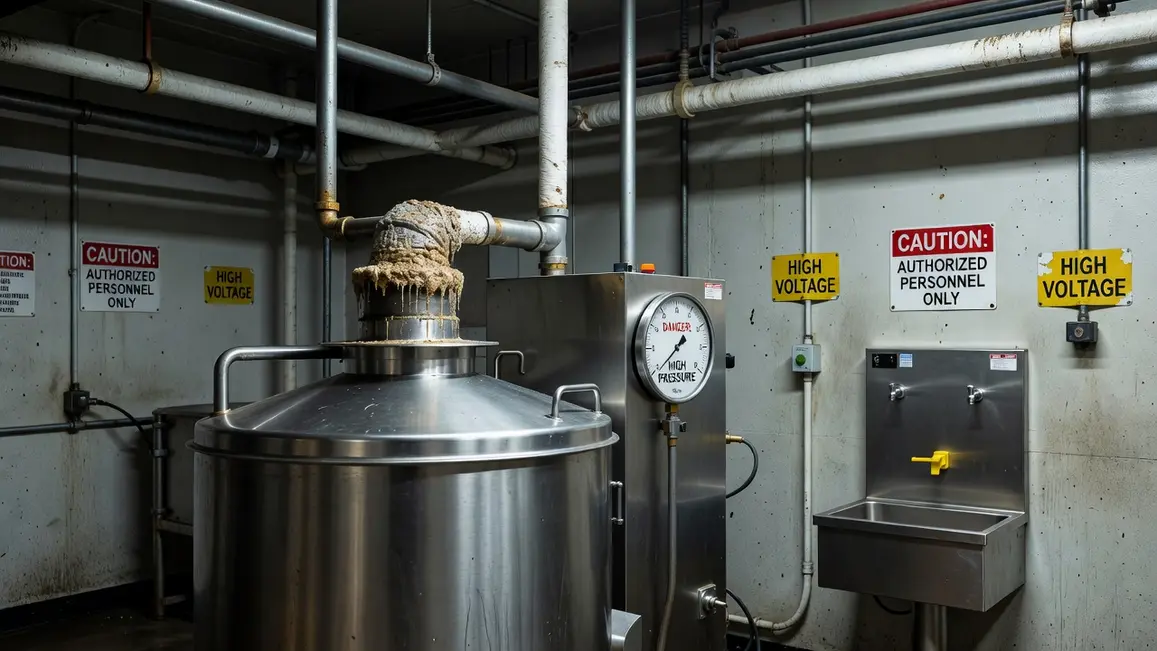
On 12 February 2026 at the Janesville, Wisconsin food-manufacturing plant operated by IPMF LLC (NaturPak), a clogged vent line on an industrial kettle caused the lid to release under pressure. This event directly illustrates failures in pressure vessel safety, ejecting steam, hot liquid, and organic material onto two workers; one later died from injuries. A second, similar event on 18 March 2026 hospitalized three additional workers, two of whom died. OSHA’s investigation confirmed both incidents stemmed from pressure-related failures in process vessels.
The agency issued one serious citation for kettle design and pressure/thermal-burn hazards, repeat citations for inadequate lockout/tagout procedures and training, plus additional citations for fall, confined-space, and PPE-assessment failures, totaling $364,100 in penalties. These events highlight repeated exposure of workers to uncontrolled pressure hazards in food manufacturing equipment.
Core safety lesson
The Hazard: Uncontrolled pressure buildup in process vessels
The Control: Install and maintain redundant, properly sized pressure-relief or vent systems with scheduled inspections to ensure lines remain unobstructed; integrate automatic pressure-monitoring interlocks that shut down or isolate the vessel if set-points are exceeded.
Pressure vessel safety demands these layered controls because a single clogged vent line can turn routine operations into catastrophic releases of superheated material. The February and March incidents demonstrate how quickly an obstructed line escalates into fatal burns when no automatic isolation exists. Without redundant relief systems and interlocks, operators have no engineered barrier between normal production and sudden over-pressurization.
Enforcing these controls is non-negotiable because citations for kettle design and pressure hazards were issued precisely when basic safeguards were absent or bypassed. Regular inspections and interlocks eliminate reliance on human vigilance alone, directly addressing the root cause identified by OSHA. Pressure vessel safety programs that skip these steps leave facilities exposed to both regulatory penalties and preventable fatalities.
Supervisor’s discussion guide
Q1: “Looking at our own equipment today, where is the biggest risk of uncontrolled pressure buildup?”
Q2: “What steps do we take to verify vent lines are clear before starting a kettle cycle?”
Q3: “How can we strengthen pressure vessel safety through daily checks on relief devices and interlocks?”
Q4: “Are our emergency showers and eyewash stations within ten seconds of every kettle work area, and have they been tested this week?”
Action plan & inspection
- Inspect all kettle vent lines for obstructions and clear any blockages immediately.
- Verify that redundant pressure-relief valves are properly sized, functional, and tagged with current inspection dates.
- Confirm automatic pressure-monitoring interlocks are calibrated and set to isolate vessels at design limits.
- Walk the work area to ensure ANSI-compliant emergency showers and eyewash stations are within ten seconds’ travel and test each unit.
- Review equipment-specific lockout/tagout procedures for every kettle and confirm training records are current.
Key takeaways
Pressure vessel safety requires both engineered controls and disciplined inspection routines to prevent the exact sequence of events that killed three workers at IPMF LLC. Clogged vents, missing interlocks, and unverified relief systems must never be tolerated because the consequences are immediate and irreversible.
Supervisors must treat every kettle as a potential pressure hazard and enforce redundant safeguards without exception. Consistent application of these controls protects workers and ensures regulatory compliance in 2026 and beyond.
Source & Disclaimer: This toolbox talk is for educational purposes based on public report. Read Original Report