Meeting details
Topic: Hydrogen Sulfide Safety During Pulp Mill Shutdown Operations
Goal: This toolbox talk on hydrogen sulfide safety will review the Woodland Pulp LLC incident and prevent similar accidents in 2026.
The incident: what happened?
On January 27, 2026, two workers suffered fatal exposures to hydrogen sulfide gas at Woodland Pulp LLC in Baileyville, Maine, during a cold-weather shutdown. The facility had a documented history of 13 OSHA inspections since 2017, including a prior 2017 chemical exposure event in the same area that hospitalized 14 workers. Failures in hazard recognition, engineering controls, training, and respiratory protection were identified as root causes.
A separate incident occurred on March 7, 2026, when 4,400 gallons of 50% hydrogen peroxide were released uncontrolled and mixed with accumulated wood pulp, triggering a chemical fire. OSHA issued four willful and eight serious citations with proposed penalties of $794,456. These events underscore the critical need for rigorous hydrogen sulfide safety protocols in similar operations.
Core safety lesson
The Hazard: Uncontrolled release of hydrogen sulfide (H₂S) during shutdown operations combined with accumulation of wood pulp creating fuel for exothermic reactions.
The Control: Install and maintain continuous H₂S monitoring and alarm systems with automatic ventilation interlocks; require supplied-air respirators with fit-testing and medical clearance before entry; implement immediate housekeeping for spilled pulp and use containment barriers; provide documented role-specific training and clear labeling of all hazardous lines per OSHA Hazard Communication Standard.
These controls are non-negotiable because hydrogen sulfide is an immediate life-threatening hazard that can accumulate rapidly in confined or poorly ventilated areas during shutdowns. Without continuous monitoring and interlocked ventilation, workers have no advance warning before concentrations reach lethal levels. The 2017 precedent at the same site demonstrates that repeated inspections alone do not prevent recurrence when engineering controls and training remain inadequate.
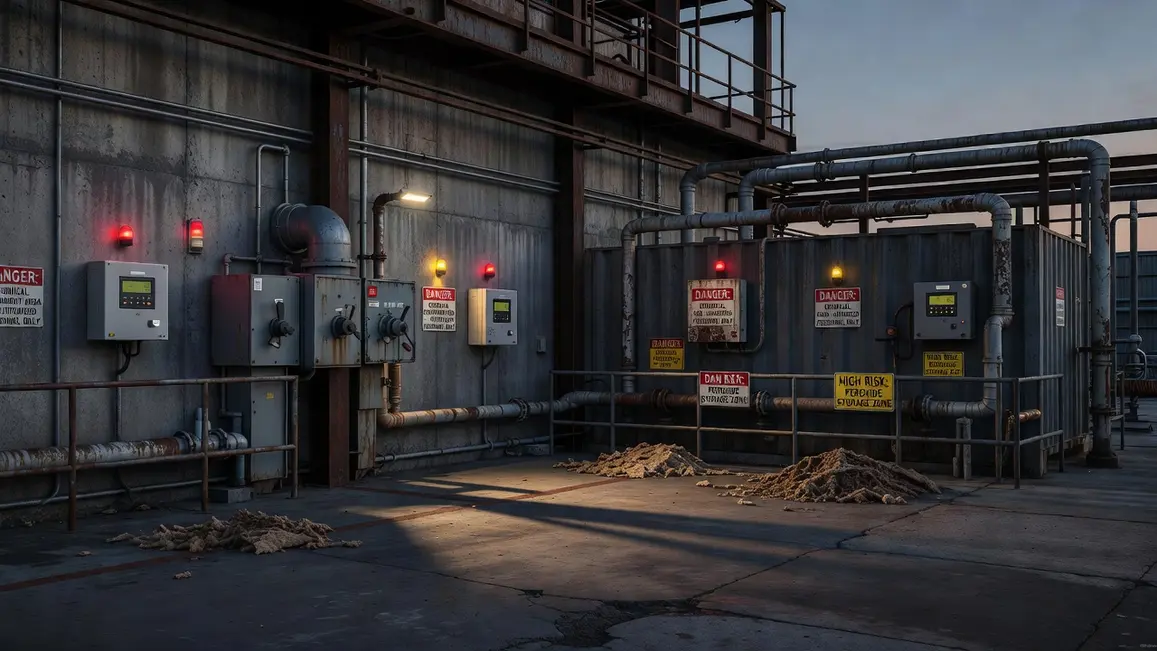
Wood pulp accumulation adds a secondary but equally serious risk by providing fuel for runaway reactions with incompatible chemicals such as hydrogen peroxide. Physical barriers and strict housekeeping eliminate this contact point, while proper labeling and training ensure every worker recognizes the specific properties and emergency actions required for chlorine, acid, and peroxide systems. OSHA’s citation pattern shows that gaps in any one of these areas directly contributed to both fatalities and the subsequent fire.
Supervisor’s discussion guide
Q1: “Looking at our own equipment today, where is the biggest risk of uncontrolled hydrogen sulfide accumulation during the next shutdown?”
Q2: “Are our current monitoring alarms and ventilation interlocks tested and functional right now?”
Q3: “What housekeeping steps are we missing that could allow wood pulp to contact chemical lines?”
Q4: “Do all piping and containers in your work area have up-to-date labels showing contents, hazards, and required PPE?”
Action plan & inspection
- Verify continuous H₂S monitors are calibrated and alarms are audible throughout the work area.
- Confirm supplied-air respirator fit-test records and medical clearances are current for all personnel who may enter potential accumulation zones.
- Inspect and clear all wood pulp spills or overflow from floors, trenches, and equipment bases.
- Check that physical containment barriers are in place to prevent pulp contact with peroxide, acid, or chlorine lines.
- Walk the area and confirm every hazardous pipe and container carries complete, legible labels with contents, hazards, and PPE requirements.
Key takeaways
Hydrogen sulfide safety demands layered protection: continuous monitoring with automatic ventilation, supplied-air respiratory protection, and rigorous training. The January 27 fatalities and March 7 fire at Woodland Pulp LLC resulted directly from gaps in these controls, compounded by a history of similar incidents at the same facility. Supervisors must treat every shutdown as a high-risk operation requiring documented verification of all safeguards before work begins.
Immediate housekeeping, proper labeling, and role-specific training close the remaining exposure pathways. By enforcing these measures without exception, sites can prevent both toxic gas fatalities and chemical fires while meeting OSHA expectations and protecting the workforce.
Source & Disclaimer: This toolbox talk is for educational purposes based on public report. Read Original Report