Meeting details
Topic: Portable Ladder Safety: Weight Limits and Pre-Use Inspection Failure
Goal: This toolbox talk on Portable Ladder Safety will review a recent fatal incident involving structural failure and prevent similar accidents in 2024.
The incident: what happened?
We are addressing a recent tragedy that underscores the critical importance of proper Portable Ladder Safety. A 53-year-old worker suffered a fatal head injury after falling approximately 15 feet. The investigation determined that the worker was utilizing a portable ladder that was neither secured nor adequately inspected prior to use. This immediate failure to follow basic setup and inspection protocols set the stage for the catastrophic event.
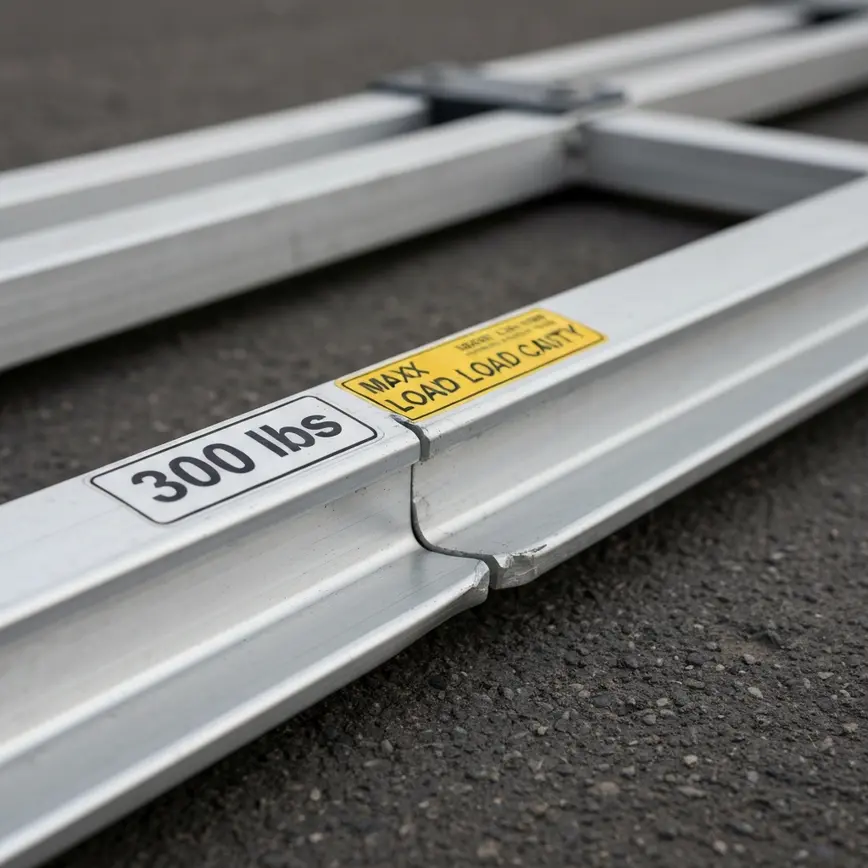
The primary mechanical failure was linked directly to the ladder’s capacity. The unit was rated for a maximum of 300 lbs. However, the combined weight of the worker and the tools being carried exceeded this manufacturer-specified weight limit, resulting in a structural failure that initiated the fall. The root cause analysis pointed clearly to inadequate pre-use inspection protocols and a severe failure to adhere to the established weight capacity limits for the equipment, illustrating that ignoring these limits has deadly consequences.
Core safety lesson
The Hazard: Exceeding Manufacturer Load Capacity leading to Structural Failure.
The Control: Strict Adherence to Ladder Load Limits and Comprehensive Pre-Use Inspection.
The failure witnessed in this incident was entirely predictable and preventable. When the total load—which includes the worker, tools, and materials—exceeds the manufacturer’s duty rating (e.g., Type I at 250 lbs, Type IA at 300 lbs, or Type IAA at 375 lbs), the structural integrity of the rails, steps, and hardware is compromised. This is not a suggested guideline; it is an absolute engineering limit. Exceeding the 300 lb rating in this case caused the structural components to fail, turning the ladder into a critical fall hazard.
Every worker must know the duty rating of the ladder they are using. This rating must account for the worker’s weight, the weight of all tools, and any materials being carried up or down. Before climbing, a mandatory, documented pre-use inspection is required. This inspection must verify the ladder’s rating label is legible, that all rungs and steps are secure, and that the ladder is free from cracks, bends, or missing components. This is fundamental to effective Portable Ladder Safety.
We cannot rely on guesswork. If the ladder is damaged, or if the combined load is close to the limit, the ladder must be tagged out and immediately replaced with a higher-rated unit or an alternative means of access, such as scaffolding or a lift. Compromising on these inspections or ignoring load limits is a direct violation of our safety policy and turns a necessary piece of equipment into a critical, life-threatening risk.
Supervisor’s discussion guide
Use these questions to facilitate a focused discussion with your crew:
- Q1: “Looking at our own equipment today, where is the biggest risk of structural failure due to overloading? Are we using the correct duty-rated ladder for the task?”
- Q2: “How do we ensure every crew member knows the difference between a Type I, IA, and IAA ladder rating, and where is that information clearly posted on our site?”
- Q3: “What specific steps are we taking right now to improve our adherence to Portable Ladder Safety protocols, especially regarding securing the base and top of the ladder?”
- Q4: “Show me the last three pre-use inspection tags for the ladders currently deployed on this site. What is the immediate procedure if a ladder is found without a current, documented inspection?”
Action plan & inspection
The following five items must be checked immediately after this meeting and documented:
- Verify the duty rating label (Type I, IA, or IAA) is legible on all portable ladders currently in use on site.
- Immediately tag out and remove from service any ladder found with missing rungs, cracked rails, bent hardware, or damaged feet.
- Confirm that all workers using ladders are aware of their combined weight (worker + tools) and how it relates to the ladder’s capacity.
- Ensure all ladders are secured at the top or bottom, or both, to prevent displacement or slippage during use.
- Check that the 4:1 ratio (base distance to working height) is correctly maintained for all non-self-supporting ladders.
Key takeaways
The lesson from this fatal incident is clear: Portable Ladder Safety is entirely dependent on respecting the manufacturer’s engineering limits. The 300 lb capacity was exceeded, leading directly to a fatality. We must treat pre-use inspections as mandatory life-saving checks, not just bureaucratic paperwork. If the ladder is damaged, or if the load exceeds the rating, the work stops until the correct equipment is sourced. There is no acceptable shortcut when working at height.
Every supervisor must reinforce the concept that the ladder’s duty rating includes everything on the ladder, not just the person. We must secure our ladders, inspect them daily, and never, under any circumstances, exceed the rated load capacity. Our commitment to zero incidents starts with adherence to these basic, non-negotiable standards. The life you save is often your own or that of a coworker relying on your due diligence.
Source & Disclaimer: This toolbox talk is for educational purposes based on public report. Read Original Report