Meeting details
Topic: Roof Fall Protection During Roof Refurbishment Work
Goal: This toolbox talk on roof fall protection will review the incident involving Lowndes Lumb Construction Limited and prevent similar accidents in 2026.
The incident: what happened?
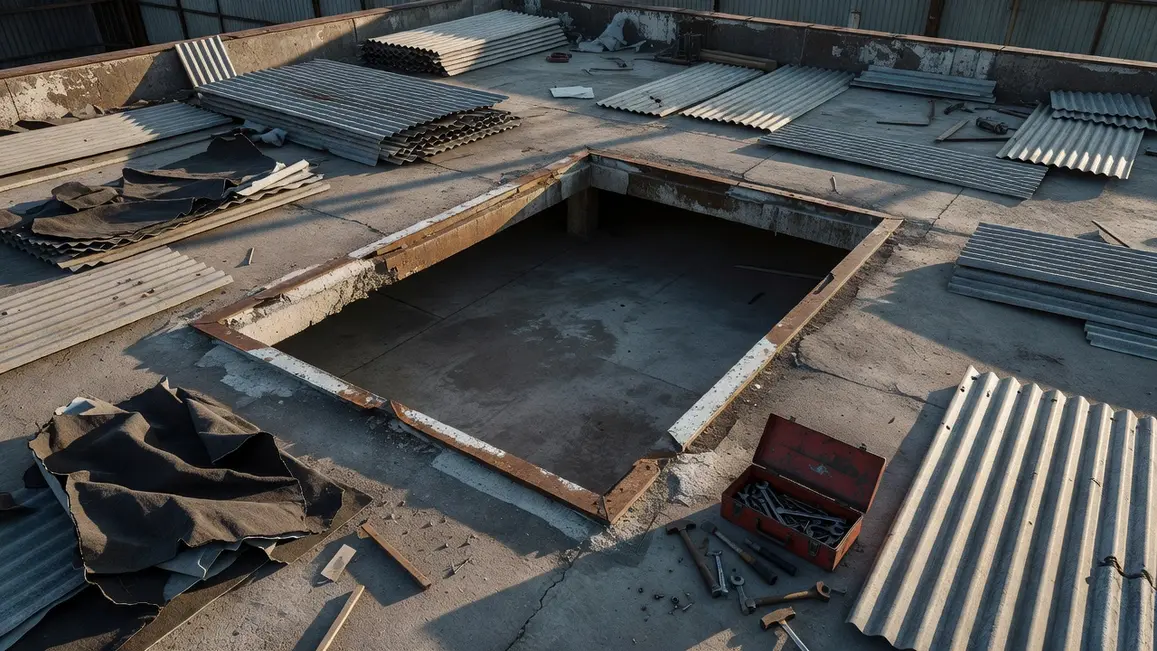
On 10 November 2023, a worker employed by Lowndes Lumb Construction Limited fell through an unprotected roof light while passing materials during roof refurbishment work at a domestic property on Langthorne Street, Fulham. The absence of any roof fall protection measures such as scaffolding, guard rails, an internal crash deck, or harness systems allowed the worker to fall onto the concrete floor below, resulting in life-changing injuries. The Health and Safety Executive investigation confirmed that the company had implemented no fall prevention controls at all.
The company pleaded guilty to breaching Regulation 6(3) of the Work at Height Regulations 2005. On 3 August 2026, Lowndes Lumb Construction Limited was fined £60,000 plus £6,070 in costs at Westminster Magistrates’ Court. This prosecution highlights the direct consequences of failing to provide adequate roof fall protection on even small-scale domestic roofing projects.
Core safety lesson
The Hazard: Unprotected roof light opening creating a fall-from-height hazard.
The Control: Install secure, load-bearing covers or guard rails around all roof light openings before work commences, ensuring they are fixed in place and capable of supporting the weight of a falling person.
Roof fall protection must be treated as a non-negotiable requirement because collective measures such as fixed covers or guard rails protect every worker on site without relying on individual compliance. When these controls are omitted, even a momentary lapse in attention or a simple task like passing materials can lead to catastrophic falls. The hierarchy of controls places collective protection first precisely because it removes the hazard rather than attempting to mitigate its effects after exposure has occurred.
Personal systems such as harnesses remain a secondary option only when collective measures are not reasonably practicable. In the Lowndes Lumb case, the complete absence of both collective and personal controls left the worker with no defence against the fall. Supervisors must therefore verify that roof fall protection is physically in place and inspected before any materials are moved or any worker steps onto the roof surface.
Supervisor’s discussion guide
Q1: “Looking at our own equipment today, where is the biggest risk of falling through roof openings?”
Q2: “What load-bearing covers or guard rails do we have available on this site, and where would they be installed first?”
Q3: “How would we confirm that any roof fall protection we install can actually support the weight of a falling person?”
Q4: “If we identify an unprotected roof light during the shift, what immediate steps must be taken before work continues?”
Action plan & inspection
- Inspect every roof light opening on the current work area and confirm secure, load-bearing covers are fixed in place.
- Verify that all planned roof fall protection measures appear in the method statement and risk assessment before work resumes.
- Check that suitable anchor points are available and tested if harness systems are required as a backup control.
- Confirm that all workers have received documented instruction on the specific roof fall protection controls for this job.
- Ensure a supervisor signs off on the completed checks before any materials are passed across the roof surface.
Key takeaways
Roof fall protection is not optional on any project, regardless of size or duration. The Lowndes Lumb prosecution demonstrates that failing to install collective controls such as covers or guard rails around roof lights leads directly to life-changing injuries and substantial legal penalties. Every supervisor must treat the identification and protection of roof openings as the first task upon arrival at a roof refurbishment site.
By embedding these controls into daily planning and immediate inspections, teams can prevent the exact sequence of events that occurred in Fulham in 2023. Consistent application of roof fall protection measures protects workers, satisfies regulatory requirements, and avoids the financial and human costs seen in this case.
Source & Disclaimer: This toolbox talk is for educational purposes based on public report. Read Original Report