Meeting details
Topic: Excavation edge protection on temporary haul routes
Goal: This toolbox talk on excavation edge protection will review the Copthall North incident and prevent similar accidents in 2026.
The incident: what happened?
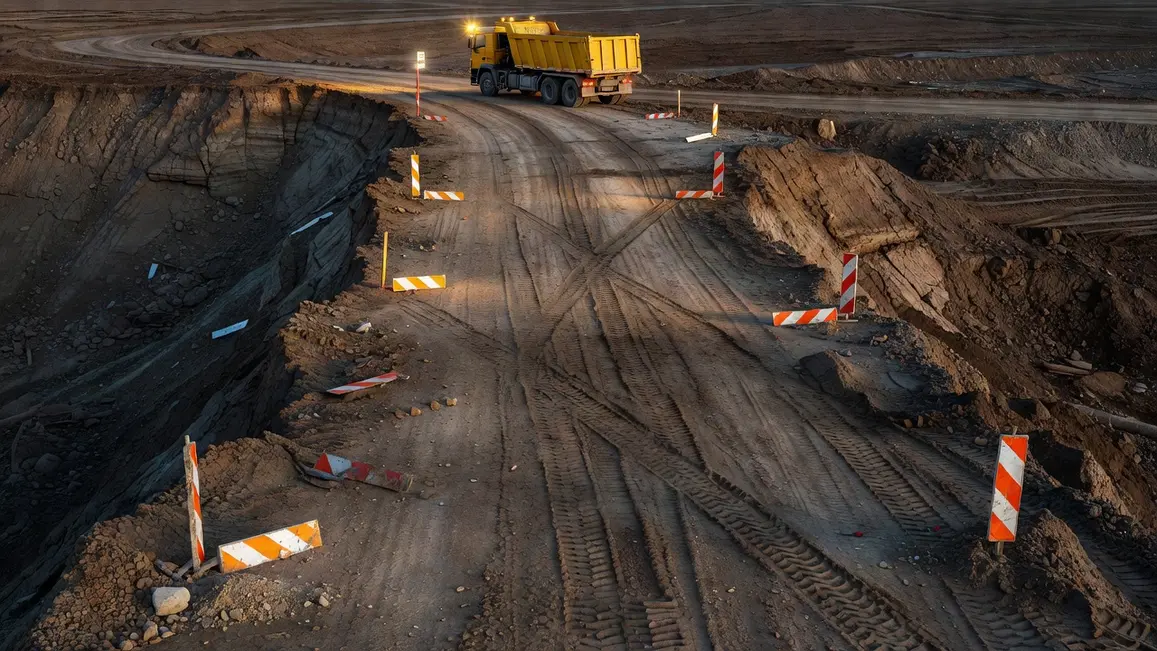
On 27 July 2021 at the Copthall North site near Uxbridge, West London, an SCS Railways excavation ramp lacked excavation edge protection and signage. A 20-tonne ACE Grab Hire tipper-truck driver followed an altered haul route and the vehicle slipped off the unprotected edge, rolled approximately two metres onto its driver’s side, and caused the driver multiple injuries including a broken nose, lacerated hand and shoulder trauma. HSE inspectors found unsupported vertical excavation faces together with no physical barriers or route markings after a last-minute change in loading position and traffic layout had placed an unguarded drop-off directly beside the new vehicle path.
SCS Railways pleaded guilty under Section 3(1) of the Health and Safety at Work etc. Act 1974 and was fined £400,000 plus £8,974 costs. The failures identified were absence of excavation edge protection, lack of signage on haul routes, unsupported excavation faces and inadequate communication of the route change.
Core safety lesson
The Hazard: Unprotected edge adjacent to a temporary vehicle route
The Control: Install robust physical barriers (e.g., earth bunds, guardrails or crash barriers) at all excavation edges where vehicles operate, in line with HSG 144 guidance.
Excavation edge protection must be treated as a permanent feature of any haul road layout rather than an optional extra. When barriers are omitted, even a minor steering correction or last-minute route alteration can place a heavy vehicle directly over an unsupported drop. The Copthall North case shows how quickly such an omission turns into a rollover and serious injury.
Because haul routes on construction sites are frequently modified, excavation edge protection arrangements must be re-assessed and physically reinstated before traffic is permitted to use the new alignment. Relying on verbal instructions or temporary markings alone leaves drivers without a clear, physical cue that an edge exists. Robust barriers provide that cue at all times and remain effective even when visibility is reduced or drivers are unfamiliar with the layout.
Supervisor’s discussion guide
Q1: “Looking at our own equipment today, where is the biggest risk of an unprotected edge adjacent to a temporary vehicle route?”
Q2: “What formal steps must be completed before any haul-road layout change is brought into use?”
Q3: “How do we ensure excavation edge protection remains in place after overnight or weekend works?”
Q4: “Which signs or marker posts on site currently show drivers the safe path and the prohibited zones?”
Action plan & inspection
- Verify that robust physical barriers are installed at every excavation edge adjacent to vehicle routes.
- Confirm that the current haul-road layout has received formal temporary-works approval and risk assessment.
- Check that clear, reflective or illuminated signage and edge delineation are present and visible.
- Inspect all unsupported vertical excavation faces and arrange immediate support or exclusion where required.
- Record attendance at this toolbox talk and issue a briefing note to any absent team members before they start work.
Key takeaways
Excavation edge protection is non-negotiable wherever vehicles operate near excavations. Last-minute route changes must never bypass the requirement for physical barriers, formal approval and clear signage. The £400,000 fine and the injuries sustained at Copthall North demonstrate the direct consequences of failing to maintain these controls.
Supervisors must treat every alteration to haul routes as a new temporary-works activity that requires re-assessment and immediate reinstatement of excavation edge protection before traffic is allowed to proceed. Consistent application of these measures prevents rollover incidents and keeps drivers safe throughout 2026 and beyond.
Source & Disclaimer: This toolbox talk is for educational purposes based on public report. Read Original Report