Meeting details
Topic: Pipeline Leak Response Procedures
Goal: This toolbox talk on pipeline leak response will review the Pemex refinery pipeline fire incident near Salina Cruz and prevent similar accidents in 2026.
The incident: what happened?
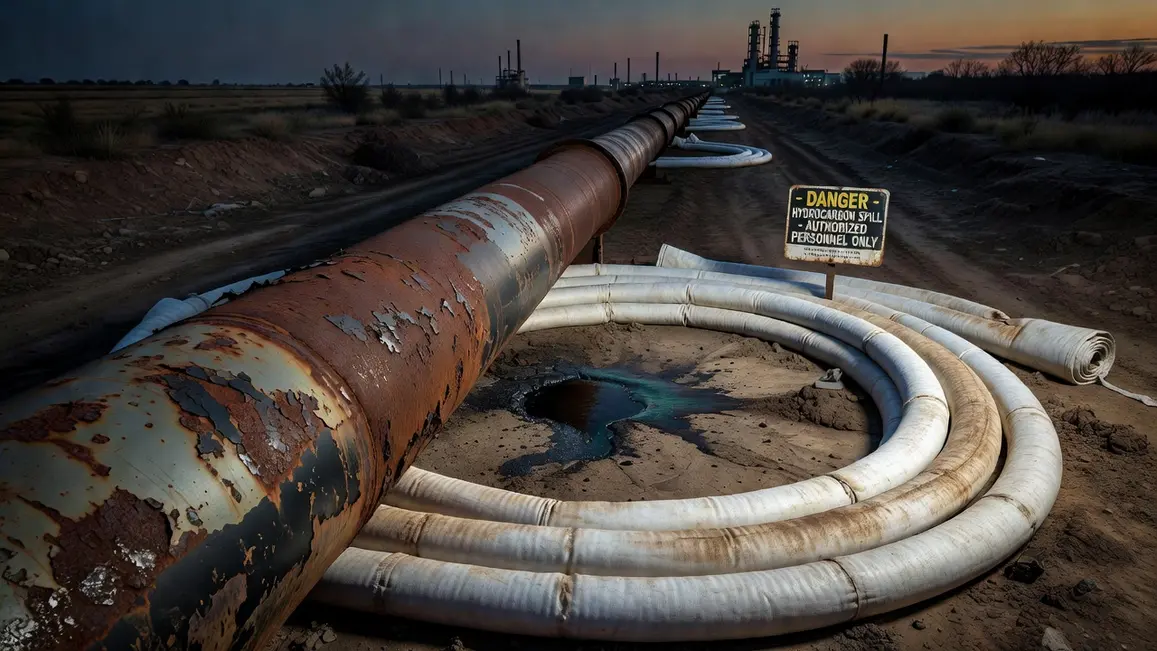
On or around June 21, 2026, a fuel oil pipeline leak occurred at kilometer 2+500 on the 16-inch Refinery–Marine Terminal line near the Aviación neighborhood in Salina Cruz, Oaxaca, Mexico. The release triggered a fire at the Antonio Dovalí Jaime Refinery operated by Pemex and produced five hydrocarbon spills across the area. Effective pipeline leak response by Pemex, the local Fire Department, and the Municipal Civil Protection Coordination Office limited further damage; the leak point was identified and isolated, spilled material was collected and returned to the refinery, and continuous monitoring remained in place afterward. No workers were injured during the event.
The sequence began with loss of pipeline containment on the active fuel oil line, allowing flammable liquid to escape and ignite. Five separate spill locations required coordinated containment and recovery efforts. The absence of injuries demonstrates that rapid isolation and material recovery can protect personnel when response protocols are executed promptly, yet the incident still underscores the need for stronger upstream prevention measures on critical refinery pipelines.
Core safety lesson
The Hazard: Loss of pipeline containment / leak of flammable liquid
The Control: Implement a robust pipeline integrity-management program that includes regular in-line inspections, pressure testing, and immediate repair of any detected anomalies before leaks can develop.
This control is non-negotiable because even a small undetected anomaly on a pressurized fuel oil line can escalate into multiple spills and fire within hours. In-line inspections and pressure testing provide early detection of corrosion, cracks, or wall thinning that would otherwise remain hidden until containment is lost. Without scheduled application of these measures, operators rely solely on reactive emergency shutdowns that cannot prevent initial release or ignition.
Regular integrity management also supports regulatory compliance and protects surrounding communities from environmental contamination. When anomalies are repaired immediately, the probability of a repeat event at the same location drops dramatically. The Pemex incident shows that once hydrocarbons escape, even successful recovery leaves residual risk; therefore, preventing the leak in the first place remains the only reliable safeguard.
Supervisor’s discussion guide
Q1: “Looking at our own equipment today, where is the biggest risk of loss of pipeline containment?”
Q2: “What ignition sources exist within 50 meters of any fuel oil or hydrocarbon line on this site?”
Q3: “How quickly can we activate emergency shutdown and isolation valves if a pressure drop is detected?”
Q4: “Which sections of our pipeline network would benefit most from an updated pipeline leak response drill this quarter?”
Action plan & inspection
- Verify that the most recent in-line inspection report for every 16-inch or larger fuel line is current and any anomalies have been repaired.
- Confirm automatic leak-detection and emergency-shutdown systems are armed and tested within the last 30 days.
- Inspect all pipeline corridors for unauthorized ignition sources and ensure hot-work permits are strictly enforced.
- Review and confirm the location and condition of dikes, absorbent booms, and spill-recovery equipment staged for rapid deployment.
- Schedule and document a joint emergency-response drill with local fire and civil-protection agencies within the next 14 days.
Key takeaways
Pipeline integrity programs that combine scheduled inspections, pressure testing, and immediate anomaly repair stop leaks before they occur. When these controls are applied consistently, the chain of events that led to the June 2026 Pemex fire and five hydrocarbon spills can be broken at the source, protecting both workers and nearby communities.
Every supervisor must treat pipeline leak response readiness as an ongoing discipline rather than a one-time exercise. Continuous monitoring, rapid isolation capability, and coordinated drills with external agencies remain essential even after an incident has been contained, because the next anomaly may appear without warning.
Source & Disclaimer: This toolbox talk is for educational purposes based on public report. Read Original Report