Meeting details
Topic: Electrical Fire Toolbox Talk: Lessons from the Railroad Equipment Incident
Goal: This toolbox talk on electrical fire toolbox talk will review the fire at Atlantic Track & Turnout Co. and prevent similar accidents in 2026.
The incident: what happened?
This electrical fire toolbox talk examines a real event that unfolded at Atlantic Track & Turnout Co., a railroad equipment supplier on East Bodley Avenue near Latham Street in South Memphis, Tennessee. Firefighters from the Memphis Fire Department responded just before 5 a.m. on May 19, 2026, and brought the blaze under control quickly. An employee initially reported the cause as an electrical issue, and investigators later ruled the fire accidental. The building sustained approximately $500,000 in damage, yet no civilians or firefighters were injured.
The incident highlights how even a single electrical malfunction can escalate rapidly in an industrial setting filled with equipment and materials. Because the fire was contained early, losses remained limited to property damage. Still, the event serves as a clear reminder that electrical systems require constant vigilance to avoid disruption and potential injury in future operations.
Core safety lesson
The Hazard: Electrical system failure or malfunction
The Control: Implement a scheduled preventive maintenance program for all electrical panels, wiring, and equipment, including thermal imaging scans and load testing to identify overheating or degraded components before failure occurs.
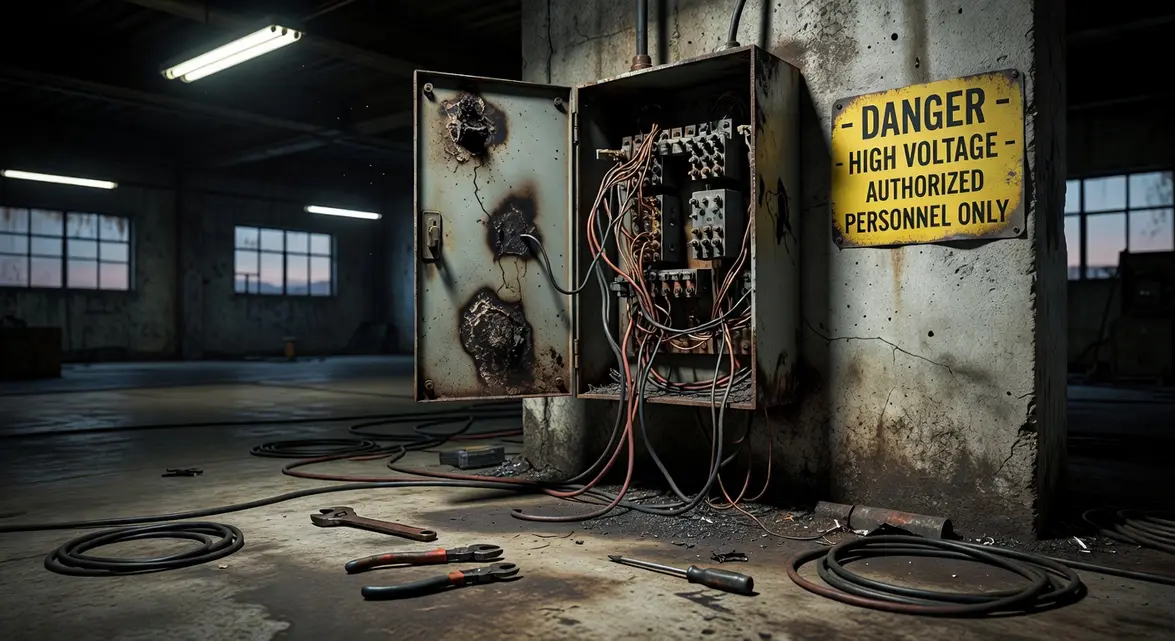
Electrical failures rarely announce themselves in advance. Over time, connections loosen, insulation degrades, and loads shift, creating heat that can ignite nearby combustibles. A structured maintenance program with thermal imaging and load testing catches these conditions early, turning a potential ignition source into a manageable repair item.
Without such controls, facilities accept unnecessary risk. Regular inspections also satisfy regulatory expectations and demonstrate due diligence. When supervisors treat electrical maintenance as non-negotiable, they protect both personnel and production schedules from sudden, costly interruptions.
Supervisor’s discussion guide
Q1: “Looking at our own equipment today, where is the biggest risk of electrical system failure or malfunction?”
Q2: “How often do we currently perform thermal imaging or load testing on panels and wiring?”
Q3: “What immediate steps can we take if we notice warm spots or unusual odors near electrical equipment?”
Q4: “In what ways does this electrical fire toolbox talk change how we approach daily equipment checks?”
Action plan & inspection
- Verify that all electrical panels have current inspection tags dated within the last six months.
- Confirm thermal imaging scans are scheduled for every major panel before the end of the month.
- Check that clear access is maintained to all disconnect switches and emergency shutoffs.
- Review recent load-test records for any circuits operating above 80 percent capacity.
- Ensure housekeeping protocols keep combustible materials at least three feet from electrical equipment.
Key takeaways
Electrical fires begin with small, detectable problems that grow when maintenance is neglected. By applying the controls discussed in this electrical fire toolbox talk, supervisors can identify and correct issues before they produce flames, smoke, or downtime.
Consistent application of preventive programs protects workers, preserves equipment, and maintains operational continuity. Make these checks part of every shift routine so that similar incidents remain outside your facility in 2026 and beyond.
Source & Disclaimer: This toolbox talk is for educational purposes based on public report. Read Original Report